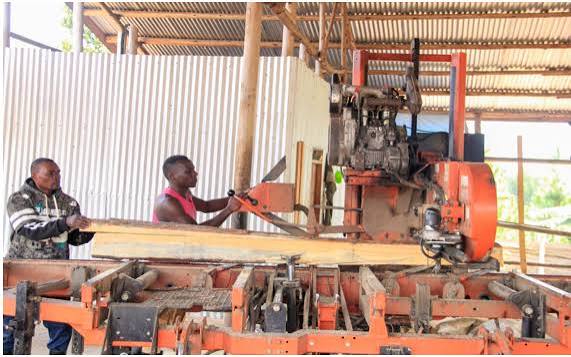
Uganda’s carpentry and timber industries are undergoing a significant transformation as small and medium-sized businesses (SMEs) embrace modern tools and sustainable practices to reduce their reliance on imported wood and decrease carbon emissions. For decades, the country depended heavily on timber imports, particularly from Asia, leading to long supply chains and increased environmental costs. However, a new wave of local innovation is driving change.
At the forefront of this shift is the push to utilize local forests and modern machinery to produce high-quality timber products. Zainabu Kakungulu, National Project Coordinator at the Food and Agriculture Organization (FAO), highlights the potential of this approach, stating, “With the right tools and machines, we can make full use of the wood in our forests to produce quality products locally.” The initiative aims to not only reduce Uganda’s reliance on imported timber but also address the carbon footprint associated with transporting materials over long distances.
The initiative is targeting 70 to 100 SMEs across Uganda, offering business coaching, technical training, and machinery upgrades to help them transition to more efficient, low-emission production methods. Kakungulu explains, “We identify key players in the sector, provide training, and assist them in accessing certified wood and better equipment. Our goal is to make these enterprises more professional, profitable, and sustainable.”
Backed by a significant €10 million contribution from the European Union, the initiative funds the acquisition of low-emission machinery and technologies. This financial support aims to improve productivity while promoting environmental responsibility. Kakungulu emphasizes that by utilizing wood from planted forests and focusing on efficient processing techniques, the sector can produce carpentry, timber, and joinery products that serve not only local markets but also regional and international demand. “This approach generates jobs, creates income, and reduces the need for imports,” she notes.
One notable example of this shift is Kirangwa Investments Limited, a sawmill in Uganda that has adopted modern machinery to boost both efficiency and environmental performance. Dr. Godfrey Bahiigwa, Director of Kirangwa Investments, explains, “Our plantation contributes to climate change mitigation because trees absorb carbon dioxide. We’ve adopted environmentally responsible practices, such as preserving valleys, wetlands, and streams, and we’ve switched from petrol to diesel in our sawmill to cut costs and reduce emissions. We also plan to adopt hydropower once electricity reaches our area.”
However, the transition is not without its challenges. Bahiigwa points out that while eucalyptus trees suppress weeds in 1.5 to 2 years, pine trees take up to five years, making weed control in pine plantations more costly. Fire hazards are another concern, but Kirangwa has implemented several measures to mitigate the risks, such as establishing fire lines, clearing boundaries, and working closely with local communities to monitor and prevent fires.
Despite these challenges, the push towards more efficient, sustainable timber production is steadily gaining momentum. SMEs in the sector are seeing the benefits of adopting environmentally friendly practices, and both business owners and project coordinators are optimistic about the future. This transformation promises to strengthen local production capabilities, reduce Uganda’s dependence on timber imports, and build a more sustainable wood-processing industry that can cater to both domestic and regional markets.
In conclusion, Uganda’s small and medium-sized businesses are proving that innovation, when paired with sustainable practices, can drive significant economic and environmental change. By tapping into local resources, adopting modern technology, and focusing on reducing emissions, these businesses are setting a new standard for the timber industry in Uganda and beyond.