Uganda and France are advocating for a transformative shift in refugee response strategies across the Great Lakes region, emphasizing self-reliance, inclusion, and long-term solutions over traditional humanitarian aid.
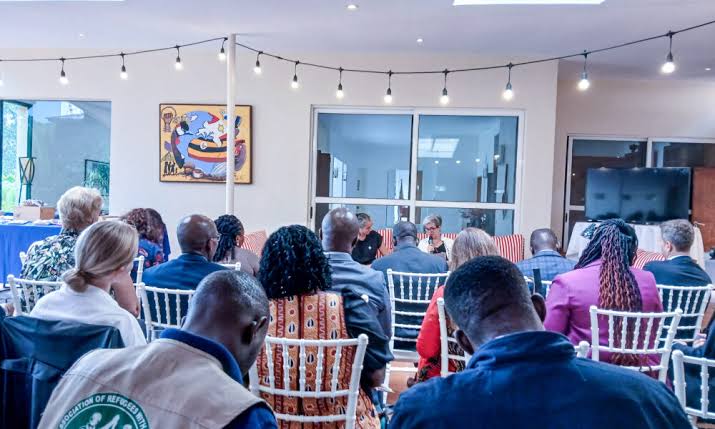
Speaking at a panel titled “Advancing Inclusive Humanitarian Action in the Great Lakes Region: Leaving No One Behind,” the French Ambassador to Uganda, H.E. Virginie Leroy, highlighted the urgency of the situation. “Uganda now hosts nearly two million refugees, making it Africa’s largest host country and third globally. Traditional aid models dependent on donor funding can no longer meet the scale of needs,” she said.
Ambassador Leroy stressed the importance of moving beyond emergency relief to structural approaches that empower refugees and uphold their dignity. “We must focus on solutions that strengthen self-reliance and support long-term development,” she noted.
Uganda has seen a surge in refugee arrivals in 2025, with more than 70,000 people entering the country from conflict zones in DRC, South Sudan, Sudan, and Somalia. About 70% are women and children, with Congolese refugees accounting for over half of the total.
Leroy also highlighted outcomes from the October 30 Paris Conference on the Great Lakes, where 70 countries and organizations pledged €1.5 billion for humanitarian efforts. Commitments included reopening Goma Airport for aid flights and securing humanitarian corridors.
The ambassador emphasized that inclusion is both a moral and practical necessity. “When the needs of women, children, and persons with disabilities are neglected, the whole community suffers,” she said.
Ms. Pauline Nadim, Regional Director of Humanity & Inclusion (HI), stressed the vulnerability of refugees with disabilities, many of whom remain unregistered and excluded from assistance. “One in five refugee households has a member with a disability. Most arrive without assistive devices or rehabilitation services, limiting their independence and access to education and healthcare,” Nadim explained.
She praised Uganda’s recent commitments following the Global Disability Summit, including guidelines on disability inclusion and support for refugee-led organizations, urging stakeholders to move from pledges to actionable programs. “We must strengthen data collection, engage refugees in program design, and ensure inclusive targeting,” she said.
Representing the Ugandan government, Patrick Okello, Commissioner for Refugees in the Office of the Prime Minister, reaffirmed the country’s Open Door Policy despite funding shortfalls. “Each refugee has a story—a mother, a child, a father seeking safety. We provide land and livelihood opportunities so refugees can achieve self-reliance through agriculture,” he said.
Okello highlighted Uganda’s integration of refugees into the National Development Plan and host district frameworks, describing the settlement system as one of inclusion and empowerment, contrasting it with policies in neighboring countries like Kenya and Tanzania, where movement is heavily restricted.
He urged donors, including France, to increase financial support, noting that Uganda even borrows to sustain refugee initiatives. “Without borrowing, grants from institutions like the World Bank are limited,” he said.
The discussion reflected a growing consensus that humanitarian responses in the Great Lakes region must evolve to meet the realities of prolonged displacement. Ambassador Leroy concluded, “Governments and humanitarian agencies cannot shoulder this responsibility alone—private sector and community-based solutions are crucial to sustainable impact.”