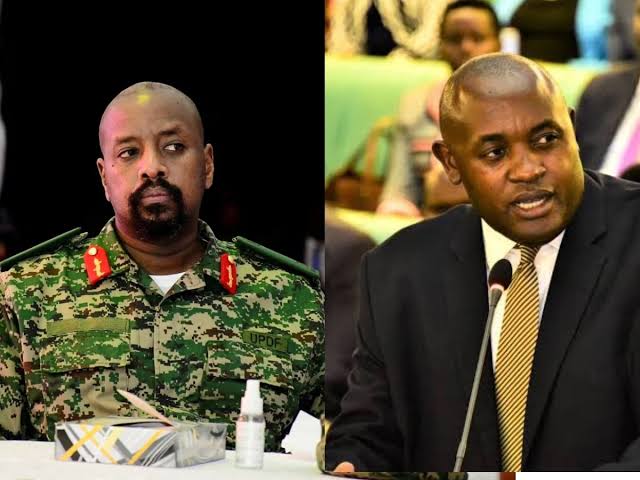
Chief of Defence Forces Gen Muhoozi Kainerugaba has once again ignited political debate after making fresh remarks regarding the appointment of Dr Chris Baryomunsi in President Yoweri Museveni’s newly announced cabinet.
In a series of posts shared on X, formerly known as Twitter, Gen Muhoozi appeared frustrated by the decision to appoint Baryomunsi despite the public disagreements the two have had in recent months.
The General suggested that President Museveni, whom he often refers to as “Mzee,” may not have been fully informed before making the appointment.
According to Muhoozi, the President was allegedly given “wrong information” and therefore “did not have all the facts” regarding Baryomunsi before approving him for the Health Ministry position.

The comments immediately attracted widespread attention online, with many Ugandans debating the meaning and implications of the statements coming from such a senior military figure.
Muhoozi further intensified the controversy when he reportedly stated that he would ensure Baryomunsi “doesn’t last long,” a phrase that quickly spread across social media platforms.
The statement sparked mixed reactions, with supporters of the General defending him while critics expressed concern about the tone and implications of the remarks.
Political analysts noted that the comments highlighted growing tensions between influential personalities within Uganda’s ruling establishment.
The disagreement between Muhoozi and Baryomunsi is not new and has been building publicly for months through social media exchanges.
At the centre of the fallout were remarks attributed to Baryomunsi in which he allegedly referred to Muhoozi as suffering from “Peter Pan syndrome.”
That phrase, commonly used to describe an adult who refuses to mature, reportedly angered the General and triggered strong public reactions from his supporters.
Muhoozi later accused Baryomunsi of going beyond political criticism by allegedly insulting his upbringing and making remarks about his mother.
Since then, the Chief of Defence Forces has repeatedly issued public warnings directed at the minister through online posts.
Many observers believed the tensions would fade after the cabinet reshuffle was officially announced, but Muhoozi’s latest statements suggest the disagreement remains unresolved.
The controversy has become one of the most discussed political stories in Uganda, especially on social media where screenshots and reactions continue to circulate widely.
Some commentators argue that such public confrontations between senior officials risk damaging the image of unity within government institutions.
Others believe the situation reflects deeper political rivalries and power struggles that are increasingly playing out in public view.
Supporters of Baryomunsi have meanwhile argued that his appointment demonstrates the confidence President Museveni still has in him despite the criticism and controversy.
They also maintain that cabinet appointments are the constitutional responsibility of the President and should not be influenced by personal disputes or online exchanges.

The incident has once again drawn attention to the growing role of social media in shaping Uganda’s political discourse and public perception of leaders.
Analysts say that platforms like X have transformed political communication, allowing senior officials to speak directly to the public without traditional filters.
However, critics warn that emotionally charged statements made online by powerful figures can easily escalate tensions and create uncertainty within the political environment.
At the time of reporting, Dr Chris Baryomunsi had not issued a direct public response to Muhoozi’s latest remarks, leaving many Ugandans waiting to see whether the disagreement will continue or eventually cool down.