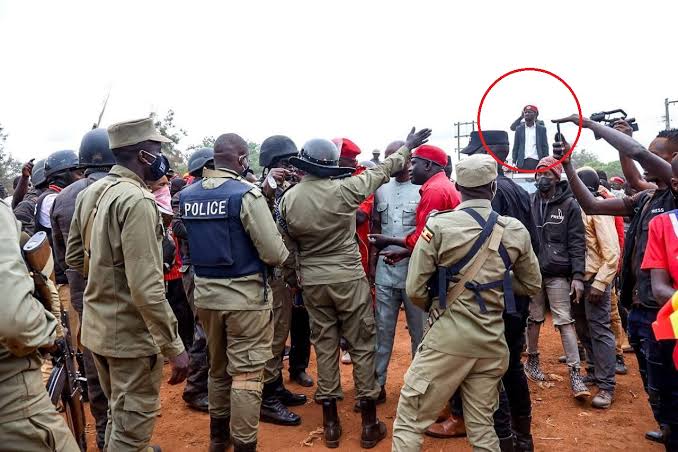
Tension has gripped Uganda’s security agencies following the arrest of eight soldiers from the Special Forces Command and Counter Terrorism units who were tasked with guarding and monitoring former presidential candidate Robert Kyagulanyi Ssentamu during the 2026 campaigns. The detained soldiers are reportedly being held at the police headquarters in Naguru.
According to sources familiar with the matter, the soldiers, including Jonan Abangira, Josh Kigenyi, Moses Luwisi, Sula Sizoomu, and John Jeff Akadan, were summoned to provide statements explaining how Kyagulanyi reportedly slipped past their surveillance.
The development has caused confusion and alarm at the highest levels of government, including the office of the President Yoweri Kaguta Museveni and the Uganda People’s Defence Forces leadership.
Officials are reportedly trying to piece together how such a high-profile individual managed to evade continuous monitoring.
Security sources say that the elite soldiers were under strict orders to follow and guard Kyagulanyi wherever he went, particularly during the heated election period when he had openly threatened to organize a protest vote against the incumbent administration.
The incident has raised serious questions about operational effectiveness and discipline within some of Uganda’s most elite security units.
Many senior officials are reportedly asking how a presidential candidate could disappear under the watch of personnel whose sole duty was surveillance and protection.

Information circulating in government circles suggests that the officers were summoned individually and collectively to provide detailed statements, including logs of Kyagulanyi’s movements, surveillance reports, and explanations for gaps in monitoring.
The detained soldiers are said to be cooperating with investigations, answering questions from senior security bosses and law enforcement personnel about what went wrong during the period leading up to Kyagulanyi’s disappearance.
Observers note that the situation is highly sensitive, as it touches on both national security and political stability. Any perceived lapses in security during a politically charged period are treated with utmost seriousness by the government.
According to insiders, the confusion among top officials intensified after learning that Kyagulanyi had disappeared at a time when he had planned significant political activities, including rallying supporters and potentially organizing a protest vote aimed at challenging President Museveni’s regime.
The incident is reportedly being treated as a major lapse, prompting internal inquiries to determine whether it was a matter of negligence, deliberate inaction, or failure in intelligence operations.
Security analysts say that elite units like SFC and Counter Terrorism are usually tasked with protecting high-value targets and monitoring individuals of national significance. A failure of this magnitude is therefore unprecedented and embarrassing for the units involved.
Sources indicate that the detained officers are currently being questioned about their adherence to standard operating procedures, including whether they followed all mandated surveillance protocols during the campaign period.
Some security insiders speculate that the investigations could extend beyond the eight detained soldiers, potentially encompassing supervisors and higher-ranking officials who were responsible for oversight of Kyagulanyi’s security.
Observers note that the arrest of the officers is a clear message from the government emphasizing accountability within security ranks, especially during politically sensitive times when the safety of high-profile individuals is involved.
The news of the arrests has sparked discussions in political and social media circles, with many commentators expressing surprise that a presidential candidate could evade surveillance by elite forces.

Many analysts also suggest that the incident reflects the challenges of balancing political oversight, security operations, and intelligence gathering, especially when dealing with highly motivated and well-organized opposition figures.
Reports indicate that the detained officers are providing detailed testimonies, including communications logs, operational schedules, and field reports, to clarify the circumstances under which Kyagulanyi slipped from their custody or surveillance.
Some sources say that senior security leadership has expressed frustration that lapses occurred despite clear instructions to monitor Kyagulanyi closely, highlighting possible gaps in coordination and operational discipline.
The incident comes at a time when Uganda is navigating post-election tensions, with opposition leaders questioning electoral outcomes and mobilizing supporters across the country. The disappearance of Kyagulanyi has added another layer of complexity to the political environment.
Officials reportedly remain tight-lipped on whether any disciplinary or legal measures beyond the detentions are being considered for the officers. However, the arrests alone indicate the seriousness with which the government is treating the security breach.
Political commentators argue that this episode could have far-reaching implications for Uganda’s security protocols, prompting reviews of surveillance procedures, elite unit operations, and inter-agency coordination to prevent similar incidents in the future.
As investigations continue, the public awaits further updates from security agencies and law enforcement on the outcome of the inquiries into the escape of Robert Kyagulanyi Ssentamu, as well as the accountability measures for the officers tasked with his monitoring.