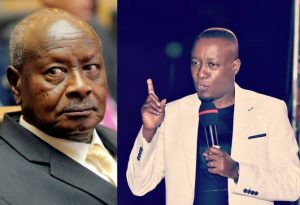
Uganda’s political debate has taken another turn following strong remarks from Adonia Ayebare, the country’s Permanent Representative to the United Nations in New York. His comments were directed at recent international activities by opposition leader Bobi Wine.
Ayebare dismissed the reported engagements as nothing more than public stunts. According to him, these actions are mainly intended to excite supporters back home rather than bring about any real political change.
The statements come at a time when Bobi Wine, whose real name is Kyagulanyi Ssentamu, has been speaking about plans to meet international leaders. He has claimed that such meetings could help address concerns about Uganda’s elections.
However, Ayebare appeared unimpressed by these claims. He argued that traveling to countries like the United States and appearing in public spaces does not necessarily mean one is engaging with top decision-makers.
To emphasize his point, Ayebare gave an example, saying that even an ordinary person, including a boda boda rider, can travel to the United States, obtain a visa, and visit places like Capitol Hill.
He explained that simply being present at such a location does not amount to official engagement with the U.S. government. In his view, the excitement surrounding these visits is exaggerated.
Ayebare also addressed concerns about why the government has not blocked Kyagulanyi from traveling. He stated that if authorities truly wanted to stop him, they have the means to do so.

He mentioned that an international alert through Interpol could be issued if there were serious reasons to restrict movement. Such a move would make it possible to arrest a person in different parts of the world.
According to Ayebare, the absence of such action suggests that the government does not see Kyagulanyi’s movements as a serious threat. This statement has added another layer to the ongoing political discussion.
Meanwhile, many Ugandans have been closely following Bobi Wine’s reported international efforts. Some supporters believe that foreign governments could influence Uganda’s political direction.
There is a growing belief among sections of the public that international attention might lead to pressure on the government. This includes hopes for sanctions or investigations into the electoral process.
Uganda’s elections have been a subject of debate, with some citizens claiming that the process was not fair. These concerns have fueled support for opposition leaders seeking justice beyond the country’s borders.
Ayebare, however, maintains that such expectations may not be realistic. He believes that internal matters should not be overly dependent on foreign intervention.
He also pointed out that global politics often operates differently from public expectations. International leaders tend to follow formal diplomatic channels rather than informal meetings.

The mention of Capitol Hill further highlights the symbolic nature of such visits. While it is an important location, access alone does not guarantee influence.
For many Ugandans, the debate reflects deeper questions about leadership, democracy, and the role of the international community. It shows how divided opinions remain on the country’s political future.
Supporters of Bobi Wine continue to see his actions as bold and necessary. They argue that seeking international support is one way to bring attention to their concerns.
On the other hand, government supporters agree with Ayebare’s view. They see the international trips as more of a public relations effort than a serious political strategy.
Political analysts suggest that both sides are trying to shape public perception. Statements like these are often aimed at influencing how citizens interpret ongoing events.
As discussions continue, many Ugandans are watching closely to see what impact, if any, these international engagements will have. The outcome remains uncertain.
In the end, this situation highlights the power of narrative in politics. Whether seen as meaningful action or mere publicity, the debate itself continues to shape opinions across the country.