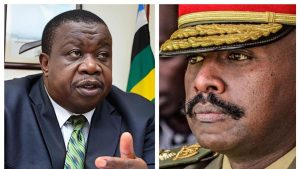
Justice and Constitutional Affairs Minister, Norbert Mao, has publicly addressed growing speculation surrounding his bid for the Speakership of Uganda’s 12th Parliament, firmly dismissing claims that his candidature is backed by powerful military figures such as Gen Salim Saleh and Gen Muhoozi Kainerugaba.
In a press conference held at the Democratic Party offices in Mengo on Tuesday, Mao emphasized that his pursuit of the Speaker position is entirely independent and motivated by a vision to reform parliamentary processes.
Mao opened the discussion by acknowledging that he has had long-standing personal and professional relationships with prominent figures, including Gen Salim Saleh, but he stressed that these relationships have largely revolved around humanitarian and development work rather than political alliances. According to Mao, misinterpretations of these interactions have fueled the rumors suggesting that his bid is influenced by external actors.
He highlighted his involvement with the Salim Saleh Foundation for Humanity and the Uganda Development Forum, initiatives focused on development and humanitarian projects, as evidence that his connections with Gen Saleh are rooted in public service rather than political patronage.
“These roles are rooted in development work rather than politics. I think all rumors have a source,” Mao stated, pointing out the need to differentiate between professional engagement and political endorsement.
Mao further emphasized that social or ceremonial interactions, such as attending Gen Saleh’s recent birthday celebration in Kigali, should not be politicized. He explained that in life, people relate with one another for a variety of reasons, and attending an event does not equate to receiving political backing. “In life, we relate with people for many reasons,” he remarked, dismissing attempts to frame his attendance at the event as a strategic political move.
Addressing speculation regarding Gen Muhoozi Kainerugaba, Mao was equally direct, rejecting any suggestion that his Speakership ambitions are influenced by the military or by the president’s family.

“I am digging my own way to the Speaker’s chair. It is an open contest, and I qualify. We have a problem, and I am the solution,” he asserted, highlighting his self-driven approach to pursuing leadership within Parliament.
Mao acknowledged that leadership in Parliament ultimately involves the ruling National Resistance Movement under the chairmanship of President Yoweri Kaguta Museveni, but he stressed that his participation in the race is based on principle and reform rather than alignment with any external influence.
He also took the opportunity to dismiss circulating reports suggesting that he had withdrawn from the Speakership race. Mao reiterated his commitment to contest the position and emphasized that his campaign is aimed at ensuring Parliament serves the interests of Ugandans. “I am still in the race, and I am in it to ensure Parliament truly serves the people,” he said, underscoring his focus on accountability and institutional reform.
Central to Mao’s reform agenda is the modernization of parliamentary processes, including the introduction of electronic voting. He argued that electronic voting would enhance transparency and accountability, making it easier to track MPs’ positions on key decisions. “Members of Parliament should vote electronically so that their positions are clear. This will stop the tendency of denying responsibility,” Mao said.
He also emphasized the importance of public participation in legislative processes. Mao suggested that Parliament should actively invite citizens to provide input on laws, making the legislative process more inclusive and responsive to the needs of the population. “Parliament must become a platform where the voices of the people are heard,” he remarked.
In addition to public engagement, Mao proposed translating parliamentary proceedings into local languages to make legislative discussions more accessible to the general population. He argued that this would help bridge the gap between legislators and citizens, ensuring that national debates are widely understood and followed.
He further advocated for increasing the number of parliamentary sitting days to at least 150 annually, arguing that this would allow for more thorough scrutiny of national issues and foster greater accountability among MPs. Mao suggested that longer sessions would enable Parliament to address pressing challenges more effectively.
Mao’s candidacy has positioned him as a reform-driven contender in the race for Speakership, highlighting his focus on transparency, accountability, and citizen engagement rather than political maneuvering or patronage networks. His proposals aim to strengthen Parliament’s credibility as an institution while promoting governance reforms that resonate with public expectations.
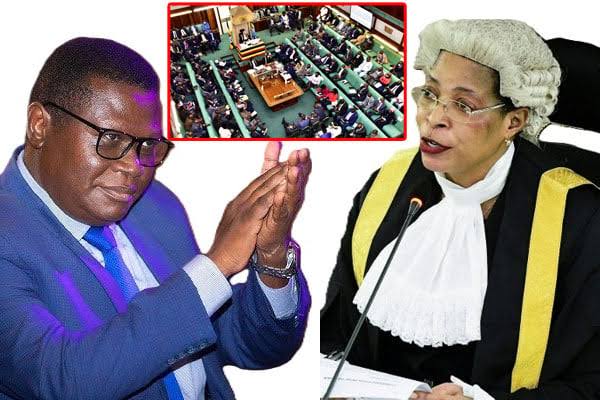
The 12th Parliament’s Speakership contest is expected to draw significant attention, with incumbent Anita Annet Among among the leading candidates. Other notable contenders include veteran NRM cadre Lydia Wanyoto, Persis Namuganza, Florence Akiiki Asiimwe, and Alion Odria, creating a competitive field for the position.
Observers note that Mao’s insistence on independence from military figures may help position him as a candidate focused on institutional reform rather than partisan or external influence, appealing to both MPs and the public who prioritize accountability.
Mao’s emphasis on technological reforms, such as electronic voting, aligns with broader trends in governance that seek to modernize legislative processes and reduce opportunities for opacity or manipulation in parliamentary decision-making.

His proposals for public engagement and language inclusivity underscore a commitment to ensuring that Parliament is not only transparent internally but also accessible and understandable to ordinary citizens, reflecting a more participatory approach to governance.
Mao also addressed the perception that personal associations with prominent figures can influence political ambitions, stressing that credibility and competence should define leadership rather than rumors or social interactions.
He maintained that his nearly three-decade-long relationships with figures like Gen Salim Saleh were forged through development work and humanitarian initiatives, illustrating that professional and social interactions should not be conflated with political patronage.
As the Speakership race intensifies, Mao’s candidacy continues to attract attention for its emphasis on reform, principle-driven leadership, and transparency, contrasting with the conventional political dynamics often associated with high-level parliamentary positions in Uganda.
Ultimately, Mao’s message to both MPs and the public is clear: his bid is independent, reform-focused, and grounded in a vision to make Parliament more accountable, accessible, and effective.
His platform aims to demonstrate that leadership within the legislature can prioritize institutional integrity and public service over political alliances.
His insistence on charting his own path, coupled with a detailed reform agenda, positions him as a candidate advocating for change, signaling to voters and fellow legislators alike that the Speakership can be an avenue for modernization, accountability, and citizen-centered governance.