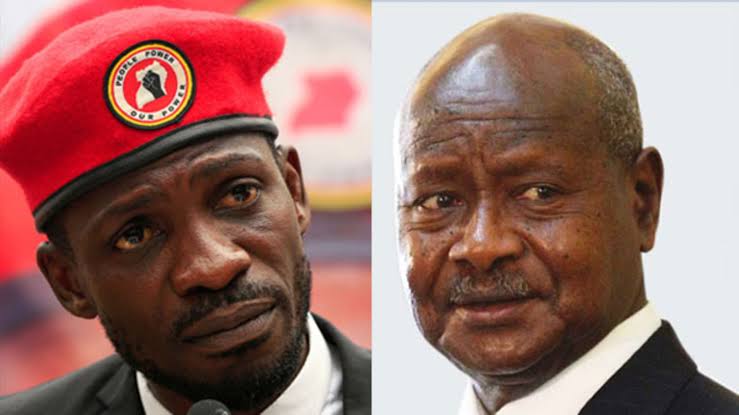
Uganda has been abuzz with discussion after Lt. Gen. Proscovia Nalweyiso clarified that opposition leader Bobi Wine was not being actively pursued by security forces when he left the country. Her comments were aimed at countering recent speculation about his departure.
Nalweyiso, who serves as the Senior Presidential Advisor on Defence and Security, emphasized that Ugandan citizens are generally free to travel as long as they are not under any active security orders. She underscored that Bobi Wine’s movements were not restricted.
“There was no security operation targeting him,” Nalweyiso said, referring to the National Unity Platform (NUP) president. She insisted that claims of him fleeing due to government pressure were inaccurate.
Her remarks followed the circulation of a video last week in which Bobi Wine announced he was temporarily leaving Uganda. In the video, he cited alleged pressure from security agencies, prompting speculation about his status.
According to Nalweyiso, Uganda has multiple official exit points—six border crossings in total—that citizens can use without restriction, reinforcing the point that Kyagulanyi’s exit was routine.
She explained that the leader’s departure should not be interpreted as an escape or evasion. “Kyagulanyi left the country because no one was looking for him,” she said, emphasizing that his movements were voluntary.
Nalweyiso also addressed claims suggesting that Bobi Wine had been hiding from security forces prior to leaving. She described those claims as unfounded and reiterated that no government entity had declared him wanted.

Her comments come amid growing public debate about the relationship between opposition politicians and state security mechanisms. Analysts note that such statements are intended to reassure both the public and international observers about the country’s procedural norms.
Kyagulanyi, who has been touring Uganda in recent months, has frequently engaged with citizens and party supporters across multiple regions. Nalweyiso emphasized that such activities do not prevent travel abroad when not under active pursuit.
Observers say that her statements are part of a broader effort to clarify the government’s position and dispel rumors about potential targeting of opposition figures.
The clarification also touches on larger questions about freedom of movement for political actors in Uganda. Citizens and politicians alike can travel as long as they are not flagged for legal or security reasons.
Nalweyiso’s statement underscores that the departure of a high-profile figure does not automatically indicate legal jeopardy or persecution. In Uganda, lawful movement is considered a right unless specific restrictions apply.
The NUP president’s departure has drawn attention in local and international media, with various interpretations about his motives and the political climate in Uganda.
While some commentators viewed his exit as an indication of tension between the opposition and state authorities, Nalweyiso’s remarks suggest that these interpretations may be overstated.
Security analysts note that the country’s multiple border points—including major land crossings and airports—allow for routine travel without monitoring unless an individual is formally under investigation.
Her assertion that “no one was looking for him” aligns with this framework, suggesting that Kyagulanyi’s exit was consistent with established protocols for citizen movement.

The clarification may also serve to preempt future narratives implying state harassment or restriction of political opposition. It reinforces the government’s stated position that opposition figures are not being targeted unless formally indicated by law.
Nalweyiso encouraged the public to focus on facts rather than speculation, emphasizing that misinformation can easily distort perceptions of political events.
Observers say that her comments may reduce tensions or misconceptions around Bobi Wine’s temporary travel, especially given the political sensitivity of his position as NUP leader.
The debate highlights the broader challenges in political communication, where statements from opposition figures and government officials are often scrutinized and interpreted through multiple lenses.
As Uganda continues to navigate its political landscape, such clarifications are likely to remain important in maintaining transparency and public confidence in legal and security protocols.
Nalweyiso concluded by reiterating that Uganda’s borders are open to citizens traveling for personal, political, or professional reasons, provided they are not under active legal or security pursuit.
Her comments signal the government’s intent to differentiate between lawful travel and illegal evasion, reinforcing the notion that freedom of movement is a right for all Ugandans.