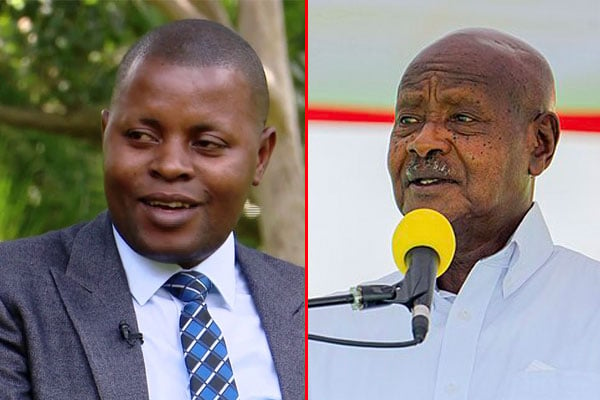
Former presidential candidate Robert Kasibante has taken a dramatic step by asking the Supreme Court for permission to withdraw his petition challenging President Yoweri Museveni’s victory in the 2026 presidential election. The move has surprised many Ugandans who were closely following the case, hoping it would bring clarity to the disputed election.

Kasibante filed an official application before the Supreme Court explaining why he can no longer continue with the legal fight. In his own words, the process has become too difficult, too expensive, and too complex for him to manage. He openly admits that he has reached his limit.
In the application, Kasibante states that the high cost of legal proceedings is one of the main reasons behind his decision. Presidential election petitions require large sums of money, including legal fees, filing costs, and expenses related to gathering evidence and witnesses.
He also points to the complexity of the legal process itself. According to Kasibante, the procedures involved in pursuing a presidential petition at the Supreme Court level are demanding and exhausting, especially for an individual without strong financial backing.
Kasibante’s petition was filed against President-elect Yoweri Museveni, the Electoral Commission, and the Attorney General. He had accused the respondents of irregularities during the 2026 presidential election, claims that attracted public attention when the case was first announced.
At the time of filing the petition, Kasibante appeared determined to fight on, insisting that the election did not reflect the true will of the people. His decision to withdraw now signals a major change in his position and raises questions about the pressure faced by opposition candidates.
In his court documents, Kasibante makes it clear that his decision is not based on satisfaction with the election results. Instead, he emphasizes that the burden of continuing the case is simply too heavy for him to carry any longer.
The Supreme Court will now have to consider his request and decide whether to grant him permission to withdraw the petition. Such applications are not automatic and must be approved by the court.
Legal experts say the court may look at whether the withdrawal affects public interest, since a presidential election petition goes beyond the individual petitioner and touches the entire country.
Kasibante’s move has sparked debate among political observers and citizens. Some sympathize with him, saying the system favors candidates with deep pockets and strong institutional support.
Others argue that withdrawing weakens the opposition’s fight for electoral accountability and denies Ugandans an opportunity to hear the full case tested in court.
The case also highlights the challenges faced by opposition candidates in Uganda’s political environment. Many struggle to raise funds and sustain long legal battles after elections.
For some observers, Kasibante’s statement that he “will not manage it” reflects a deeper problem within the democratic process, where access to justice can depend heavily on money.
Supporters of President Museveni, on the other hand, view the withdrawal as proof that the petition lacked merit from the start. They argue that the election was free, fair, and legally conducted.

The Electoral Commission has consistently maintained that the 2026 election met all constitutional and legal requirements. The Attorney General has also defended the results as valid and lawful.
Kasibante’s withdrawal request may bring the legal challenge to an early end, leaving Museveni’s victory unchallenged in court. This would strengthen the president-elect’s position as he prepares to continue in office.
Politically, the development could discourage other potential challengers from pursuing court action after elections, fearing similar financial and legal pressure.
At the same time, it may renew calls for reforms in how election petitions are handled, including reducing costs and simplifying procedures to allow fair access to justice.
Civil society groups may use this moment to push for changes that protect candidates who choose legal routes instead of street protests to resolve electoral disputes.
As the country waits for the Supreme Court’s decision on the withdrawal application, Kasibante’s case stands as a powerful example of how tough and demanding presidential election petitions can be.
Whether seen as a personal defeat or a systemic failure, the withdrawal request has added another important chapter to Uganda’s long and complex electoral history.