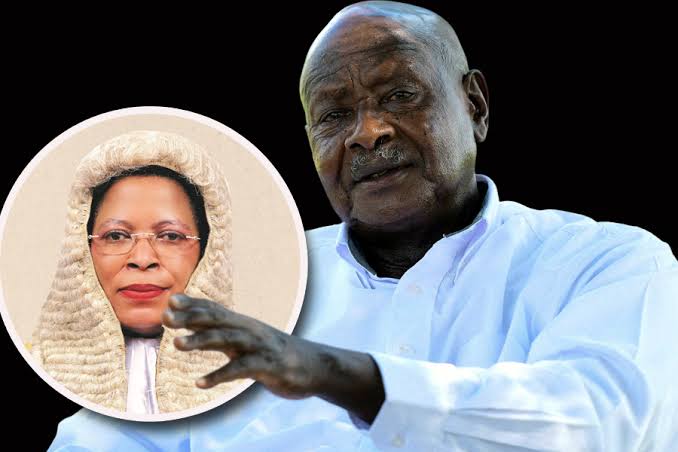
President Yoweri Museveni has called for stronger accountability in Parliament, suggesting that Members of Parliament (MPs) who fail to do their work should be dismissed before their term ends.
His statement has sparked debate about responsibility, performance, and the expectations voters have of their leaders.
Speaking on the matter, Museveni said he is not sure whether Parliament has the legal power to do it, but he believes it should be possible.
According to him, if an MP is not working toward what the people elected them to do, they should not be allowed to simply stay in office until the next election.
The President’s remarks highlight a growing concern among citizens about service delivery. Many voters often complain that some leaders disappear after elections and only return when seeking votes again. Museveni’s proposal appears to address this frustration directly.
He emphasized that leadership is about responsibility, not just holding a title. Being an MP, he suggested, should mean active participation in debates, representing people’s needs, and pushing for development in constituencies. Without this, the position loses meaning.
Museveni’s idea raises important legal and constitutional questions. Currently, MPs are elected for a fixed term, and removal from office usually follows strict procedures. His suggestion introduces the idea of performance-based removal, which would be a major change.

Supporters of the President’s view say it would make leaders take their duties more seriously. They argue that fear of losing the seat could push MPs to attend sessions regularly, speak on national issues, and stay connected with their communities.
Others, however, warn that such a move could be controversial. They say defining “poor performance” is not easy. Some MPs may be active behind the scenes, even if they are not always visible in Parliament debates.
There is also the concern of who would decide whether an MP is underperforming. Would it be voters, Parliament, or another body? This question is central because fairness and transparency would be necessary in any such system.
Museveni’s statement also touches on the broader issue of accountability in public service. Many citizens believe that once leaders are elected, it becomes difficult to hold them responsible for unfulfilled promises. His suggestion appears to push for stronger checks.
In many democracies, recalls or removal mechanisms exist, but they are often rare and complicated. Introducing such a system in Uganda would require legal reforms and careful planning. It would not be a simple change.
The President’s remarks may also be seen as a message to current MPs. It reminds them that their work is being watched not only by voters but also by national leaders. It sets a tone that performance matters.
For ordinary citizens, the idea may sound appealing. Many people want leaders who are visible, active, and responsive. Hearing the President speak about removing non-performing MPs may give them hope for better representation.
However, critics caution that political competition can influence how performance is judged. They fear the system could be misused to target certain individuals unfairly if not handled properly.

The discussion also raises awareness about the role of Parliament itself. MPs are not only meant to attend sessions but also to make laws, monitor government programs, and represent public concerns. Their work goes beyond speeches alone.
Museveni’s words reflect a push for results-driven leadership. He has often spoken about service delivery and development, and this statement fits into that broader message of demanding effectiveness from leaders.
Young voters, especially, have shown interest in how leaders perform after elections. Many expect quick action and visible change. The President’s suggestion speaks to this demand for active leadership.
Still, legal experts say any change would need to respect the Constitution and democratic principles. Clear guidelines would be required to protect both leaders and voters.
Whether or not the proposal becomes reality, it has already started a national conversation. People are discussing what it truly means to represent citizens and how leaders should be evaluated.
Museveni’s statement may also encourage MPs to reflect on their work. Knowing that performance is under public scrutiny can push leaders to improve engagement and service.
In the end, the debate centers on one key idea: leadership is a duty, not a privilege. The President’s call for removing poorly performing MPs has placed accountability at the heart of Uganda’s political conversation, and many are watching to see what happens next.