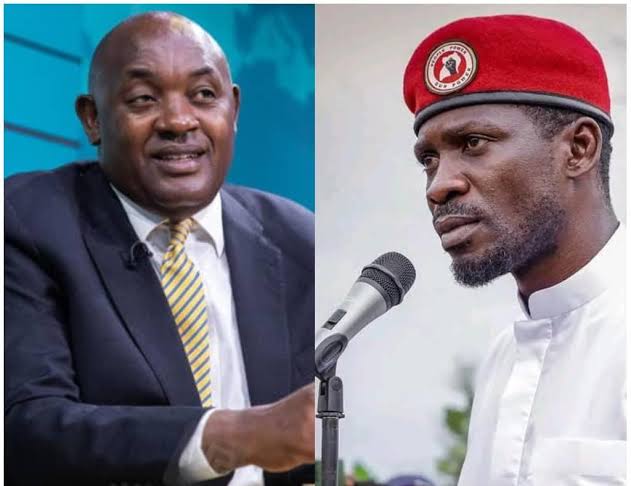
Uganda’s political scene has once again drawn public attention after remarks made by ICT and National Guidance Minister Dr. Chris Baryomunsi directed at National Unity Platform (NUP) leader Robert Kyagulanyi, popularly known as Bobi Wine. His comments have sparked conversations across the country, especially among political supporters on both sides.
Speaking during an appearance on NBS TV, Dr. Baryomunsi called on Bobi Wine to stop hiding and return home. He stated that the government is not searching for him and that there is no reason for fear or avoidance.
The minister emphasized that the election period is over and that political tensions should now cool down.
According to him, the country needs to move forward instead of remaining stuck in post-election drama.
He described the situation as unnecessary theatrics, suggesting that continued claims of being hunted or unsafe may be exaggerated. His message was framed as reassurance that there is no active threat from the state against the opposition leader.
These remarks come at a time when political emotions are still high following the election season. Supporters of different parties continue to debate the fairness, outcomes, and conduct of the electoral process.

Dr. Baryomunsi’s statement appears aimed at calming the political environment and projecting an image of stability. By saying the state is not looking for Bobi Wine, he signaled that there is no official action targeting him.
However, reactions to his comments have been mixed. Some government supporters agree with the minister, saying leaders should focus on development and unity after elections rather than keeping political temperatures high.
On the other hand, opposition supporters question the reassurance, pointing to past incidents where opposition figures have reported arrests, restrictions, or heavy security presence around them.
The situation highlights the deep mistrust that exists between the opposition and the government. Even statements meant to reassure can be met with doubt because of previous political experiences.
Dr. Baryomunsi also emphasized the importance of national unity after elections. In many democracies, elections can create division, but leaders are expected to encourage healing and cooperation once the process is complete.
His remarks suggest that the government wants to present a picture of normalcy, where political competition ends at the ballot box and everyday governance continues.
Bobi Wine, as a major opposition figure, remains an influential voice, especially among young people. Any message directed at him naturally draws wide attention and strong reactions.
The use of the word “drama” in the minister’s statement has also been widely discussed. While some see it as a call to reduce tension, others interpret it as dismissing concerns raised by the opposition.
Political analysts note that communication after elections is very important. The language used by leaders can either ease tensions or deepen them, depending on how it is received.

For ordinary citizens, the focus is often less on political exchanges and more on daily issues like the cost of living, employment, and access to services. Many hope leaders will shift attention to solving these challenges.
The statement from Dr. Baryomunsi also reflects the ongoing contest of narratives. While the government emphasizes peace and stability, opposition groups may emphasize caution and vigilance.
In Uganda’s political history, post-election periods have sometimes been sensitive. That is why words from senior officials carry significant weight and are closely watched by the public.
Some observers believe such public statements are part of efforts to reduce international concern and show that the country remains stable after elections.
Regardless of different opinions, the exchange shows that Uganda’s political conversation remains active. Leaders continue to address each other publicly, and citizens follow closely.
In the end, Dr. Baryomunsi’s message centers on the idea that elections are finished and that political life should return to normal.
Whether this call will ease tensions or fuel more debate depends on how all sides respond in the days ahead.