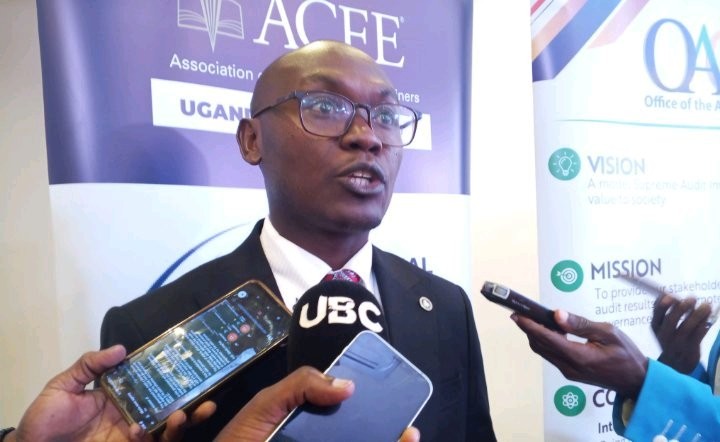
The Association of Certified Fraud Examiners (ACFE) Uganda Chapter, in collaboration with key partners, has officially launched its 2025 Regional Fraud Conference at Speke Resort Munyonyo. Under the theme “Safeguarding Integrity in the Virtual World: Responding to Deepfakes and Insider Threat-Driven Fraud,” the two-day event is aimed at raising awareness about emerging fraud trends and equipping professionals with the necessary skills to address both traditional and cyber-enabled fraud.
During the opening session, Mr. George Mugabe Turyamureeba, President of the ACFE Uganda Chapter, addressed the press, highlighting the need for greater public awareness about the tactics used by fraudsters. He noted that while Uganda has strong legal frameworks in place, such as the Penal Code Act and the Computer Misuse Act, the general public’s understanding of how fraudsters operate remains insufficient. “There is a need for people to better understand how conmen and fraudsters work, so they can avoid falling victim to their schemes,” Turyamureeba emphasized.
He also pointed out that cybercrime continues to evolve rapidly, demanding that those in the anti-fraud sector consistently update their skills. “We, as fraud fighters, have faced threats from powerful individuals in society. However, we are not intimidated. We continue to collaborate with stakeholders like the Uganda Police, the Auditor General, and other agencies to ensure that fraud is eradicated from Uganda,” he stated.
Despite these efforts, Turyamureeba highlighted the shortage of professionals working in anti-fraud roles across the country, calling for more training to address this gap.
Call for Government Partnership
In his remarks, CPA Mustapha Mugisha, the Founding President of ACFE Uganda Chapter, urged the government to formalize its partnership with ACFE Uganda in order to bolster institutional capacity. He recommended integrating Certified Fraud Examiners into financial management reforms, enhancing forensic capabilities across ministries and agencies, and embedding fraud risk intelligence—particularly in the context of artificial intelligence—into systems such as procurement, revenue collection, and digital services.
“Government should work alongside ACFE Uganda to ensure that we are equipped with the right tools to combat fraud in the digital age,” Mugisha said.
Focus on Prevention and Public Awareness
Emmanuel Chagara, a cybersecurity expert and CEO of Milima Security, stressed the importance of focusing on prevention rather than just reacting to fraud cases. He noted that while fraud has existed for centuries, the rise of digital platforms has led to a significant increase in cybercrime. “Fraud evolves with technology. We must create platforms that help people understand fraud, because when you understand how fraud works, you are better equipped to defend yourself,” Chagara explained.
He also warned that while cyber fraud is on the rise, traditional forms of fraud, including paper-based scams and loan fraud, remain prevalent. With Uganda’s growing internet penetration and increasing use of digital financial services, Chagara emphasized the need for heightened cybersecurity awareness.
Accountants Urged to Lead the Fight
Ms. Lydia Tusiime, representing CPA Derrick Nkajja, CEO of the Institute of Public Accountants of Uganda (ICPAU), praised ACFE Uganda and its partners for organizing the conference. She described it as a timely and essential initiative. “This conference addresses a critical issue that is rapidly growing in our country. As accountants, we have a significant role to play in fighting fraud,” Tusiime remarked.
She urged accountants to stay ahead of fraudsters so that they can effectively advise their organizations and clients. “As business advisors and custodians of financial integrity, we must always be proactive, anticipating fraudulent activities before they occur,” she added.
The conference, which began on Thursday, November 20, 2025, is set to conclude on Friday, November 21, 2025. It serves as a platform to engage key stakeholders in a collective effort to enhance Uganda’s capacity to detect, prevent, and respond to various forms of fraud, particularly those emerging in the digital and online spaces.
As the event draws to a close, the ongoing dialogue and knowledge sharing among experts, government representatives, and private sector players will be crucial in shaping Uganda’s future approach to fraud prevention and ensuring greater transparency and accountability in the nation’s financial systems.