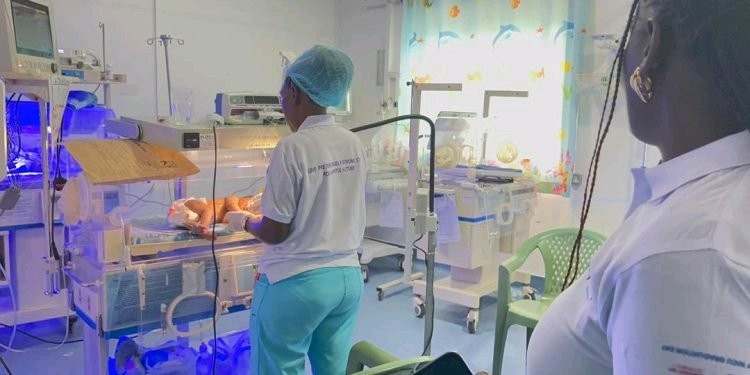
Kampala Hospital marked World Prematurity Day with a focus on Uganda’s growing challenge of premature births, emphasizing the need for improved neonatal care, specialised training for healthcare workers, and long-term financial support for affected families. The event, themed “Premature: A Hopeful Beginning, A Hopeful Future,” brought together neonatologists, paediatricians, hospital leadership, and parents to honour preterm babies and discuss strategies to improve survival outcomes.
Dr. Peter Kibuuka, CEO of Kampala Hospital and Consultant Obstetrician and Gynaecologist, stressed that efforts to prevent premature births must begin during pregnancy. “From conception, through careful monitoring, proper nutrition, and management of maternal conditions, we lay the foundation for a healthy delivery,” he said. “But when babies arrive early, intensive care becomes a critical lifeline.”
Prematurity remains one of the most urgent health issues in Uganda. While survival rates for extremely preterm infants have improved globally, Uganda still faces a shortage of trained personnel capable of managing babies born as early as 22 weeks. “Technology alone is not enough,” Dr. Kibuuka explained. “We need skilled staff to operate equipment, make critical decisions, and provide round-the-clock care.”
The hospital highlighted the financial and resource challenges involved. Essential medications like surfactant, which helps premature babies breathe, cost about one million shillings per dose, while incubators exceed 80 million shillings each and often require specialised maintenance. With only one neonatologist on staff, the hospital faces significant capacity constraints in delivering optimal care.
Dr. Kibuuka called for a national health insurance scheme to protect families from catastrophic medical costs. “Caring for premature infants is financially demanding. Insurance support is critical to ensure families can access life-saving care without being burdened,” he said.
Paediatrician Dr. Nuriat Nambooze underscored prevention as a key strategy. She highlighted the importance of early and consistent antenatal care, hospital deliveries in equipped facilities, and post-discharge practices such as Kangaroo Mother Care, which improves feeding, growth, breathing, and parent-child bonding. She also pointed to maternal health challenges and socioeconomic stress as significant contributors to preterm births.
Shamillah Nsimenta, head of the Special Care Unit, reported that Kampala Hospital has cared for 373 premature infants, achieving a survival rate of about 80%. The hospital celebrated its NICU graduates—babies who successfully overcame intensive care—demonstrating that with continued investment in staff training, equipment, and neonatal technologies, survival rates for Uganda’s most vulnerable newborns can continue to improve.