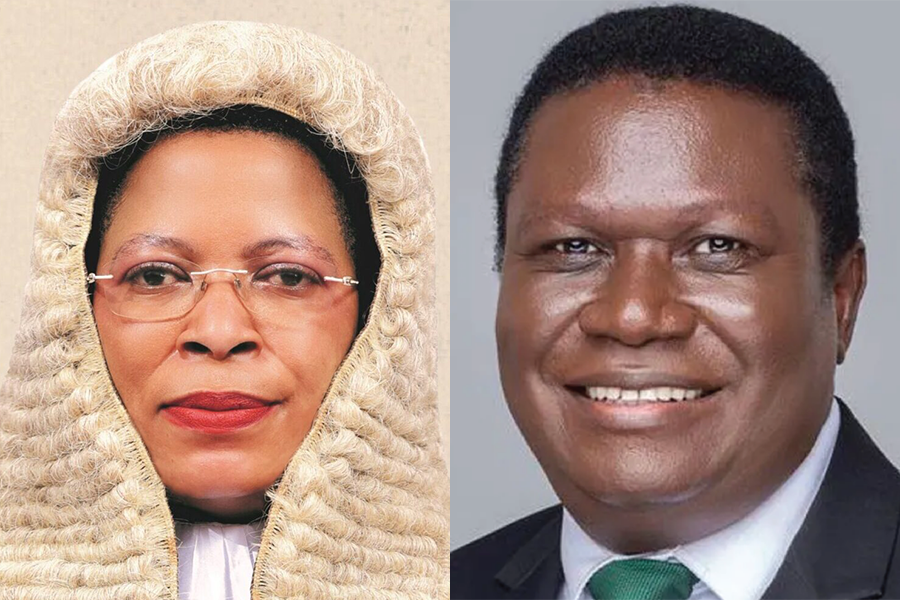
Norbert Mao has intensified the political debate in Uganda with a sharply worded rhetorical question: whether there was ever a “plan” or “intention” behind the death of former Speaker Jacob Oulanyah.
His remarks, delivered in a defensive tone, were aimed at clarifying his earlier description of the current Speaker as “accidental,” but they have instead deepened public discussion and controversy.
Mao’s statement was not an allegation but a rhetorical device intended to challenge critics of his earlier comments. By posing the question, he sought to highlight what he يرى as a logical inconsistency in the backlash he received.
He argued that if people reject the term “accidental,” they must then explain whether events leading to leadership changes were planned.
At the heart of Mao’s argument is the sudden and tragic passing of Oulanyah in 2022, an event that reshaped Uganda’s parliamentary leadership.
Mao maintains that this unforeseen development is what created the pathway for Anita Annet Among to assume office, reinforcing his use of the term “accidental” in a strictly contextual sense.
The minister expressed frustration at what he described as deliberate misinterpretation of his words.

According to him, critics have chosen to focus on the emotional weight of the term rather than its dictionary meaning. He insists that his comments were analytical, not personal or disrespectful.
Mao’s rhetorical question—whether Oulanyah’s death was planned—was designed to emphasize the absence of intentionality in the sequence of events.
However, the phrasing has unsettled many, as it touches on a sensitive subject involving loss and national mourning. This tension has fueled ongoing debate across political and public spheres.
Supporters of Mao argue that he is simply encouraging Ugandans to think critically about political language and context. They believe his comments have been taken out of proportion and that his core message about unplanned political transitions remains valid.
On the other hand, critics contend that invoking such a question, even rhetorically, is inappropriate. They argue that it risks trivializing a deeply emotional moment in the country’s recent history and could be perceived as insensitive to the memory of Oulanyah.
Mao has consistently rejected these criticisms, reiterating that he meant no harm. He has framed the backlash as a misunderstanding driven by political opponents and emotional reactions rather than careful consideration of his words.
The controversy has also brought renewed attention to Mao’s broader political ambitions. As a leading figure in the Democratic Party, he is positioning himself as a candidate for Speaker in the upcoming 12th Parliament, using this moment to articulate his vision for leadership.
In his view, the next Speaker should be chosen through a deliberate and competitive process rather than circumstances dictated by unexpected events. He has argued that such an approach would strengthen democratic legitimacy and public confidence in Parliament.
Mao’s comments also reflect a broader critique of how leadership transitions occur in times of crisis. He suggests that while constitutional processes are followed, the underlying circumstances can still shape outcomes in ways that are not entirely planned or ideal.
The reaction to his remarks highlights the delicate balance politicians must strike when discussing sensitive issues. Words carry weight, and even intended logical arguments can evoke strong emotional responses when tied to real-life tragedies.
Mao’s insistence on standing by his words demonstrates his characteristic political style—direct, unapologetic, and often provocative. This approach has earned him both admiration and criticism throughout his career.

The debate has extended beyond political circles into public discourse, with citizens weighing in on social media and other platforms. Many are divided on whether Mao’s explanation is reasonable or whether his language crossed a line.
Some analysts see this episode as part of a larger pattern in Ugandan politics, where rhetoric and interpretation often become as significant as policy itself. The focus on Mao’s wording underscores how language can shape political narratives.
Mao has urged the public to move beyond emotional reactions and engage with the substance of his argument. He believes that understanding the context of his remarks is essential to appreciating his perspective on leadership and governance.
At the same time, the controversy serves as a reminder of the enduring impact of Oulanyah’s death on Uganda’s political landscape. It remains a sensitive topic that continues to influence discussions about leadership and succession.
As the country prepares for future parliamentary developments, Mao’s remarks may have lasting implications for his political trajectory. They have brought him increased visibility but also intensified scrutiny of his statements and intentions.
Whether his rhetorical question ultimately strengthens or weakens his position remains to be seen. What is clear, however, is that it has sparked a national conversation about language, intent, and the nature of political transitions.
In the end, Mao’s comments illustrate the complexities of political communication in a charged environment. They show how a single question, even when intended as a logical argument, can resonate far beyond its original context and provoke widespread debate.