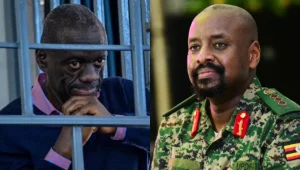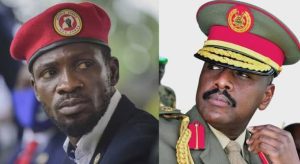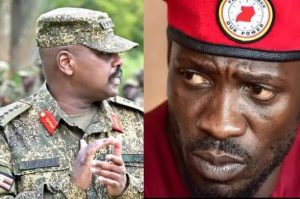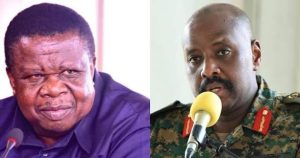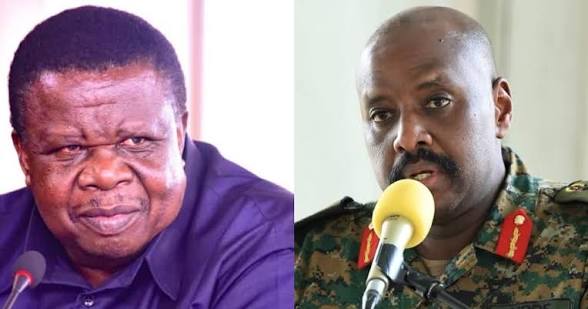
Amos Rwangomani, the younger brother of veteran Bush War general and Minister Kahinda Otafiire, has found himself at the centre of public attention following a firearms case that remains under investigation. His legal troubles have emerged as his elder brother engages in a public disagreement with Chief of Defence Forces Gen Muhoozi Kainerugaba over political leadership, military power and Uganda’s future.
Rwangomani, 56, works as a supervisor with Kamed Security Company and is accused of unlawfully possessing two pistols and 10 rounds of ammunition. Prosecutors recently asked the General Court Martial in Makindye for more time to investigate the allegations, saying there were outstanding issues in the case file. The court adjourned the matter to November 4, 2026. Rwangomani remains out on bail and has not been convicted.
The case attracted attention after Rwangomani’s family reported that he had disappeared in August 2025 after allegedly being picked up while eating at Mulago Business Centre in Kampala. His wife petitioned the High Court for a writ of habeas corpus, seeking to establish his whereabouts. In February 2026, the court ordered the relevant authorities, including the UPDF, to produce him dead or alive and account for his detention. He later appeared before the military court and was charged.

The legal proceedings are unfolding against a public dispute between Otafiire, a veteran of the 1981–1986 National Resistance Army bush war, and Gen Muhoozi, the son of President Yoweri Museveni. Otafiire has questioned the idea that Muhoozi should automatically succeed his father, arguing that presidential leadership should be determined through democratic competition rather than family connections.
Tensions increased after Otafiire addressed Parliament on September 30, speaking about political tolerance and warning against using violence to resolve disagreements. Although he did not mention Muhoozi by name in those remarks, the general responded on social media, demanding an apology and threatening to have the minister arrested. Otafiire later maintained his position, declaring that he would rather stand and fight for his convictions than live on his knees begging.
The confrontation has also drawn in Muhoozi’s supporters and the Patriotic League of Uganda, a political pressure group chaired by the general. PLU officials have criticised Otafiire and signalled plans for political mobilisation in his home region. The exchanges have widened the dispute beyond the two senior figures, bringing questions about political loyalty and the future leadership of Uganda into public debate.
However, no evidence presented in the reported court proceedings establishes that Rwangomani’s firearms case is connected to his brother’s political views or that Gen Muhoozi directed the prosecution. The allegations against Rwangomani remain unproven, and the circumstances surrounding his reported disappearance have raised separate questions that require answers from the relevant authorities.
The next court appearance on November 4 is expected to provide an update on the investigation. While the firearms case will be determined through its own legal process, it has become a subject of public interest because of the wider political tensions surrounding Otafiire and Muhoozi. For now, the relationship between the two matters remains unproven, even as the dispute within Uganda’s ruling establishment continues.