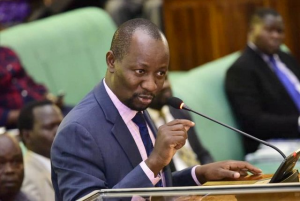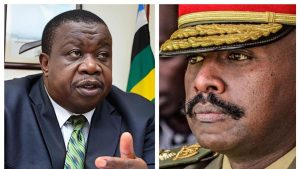
Chief of Defence Forces Muhoozi Kainerugaba has stirred fresh political debate after publicly defending the position of David Kabanda within the Patriotic League of Uganda (PLU), insisting that his current role is more significant than serving as a Cabinet minister.
Muhoozi made the remarks while responding to growing discussions surrounding the recently announced Cabinet appointments, where several politicians were handed ministerial positions while Kabanda remained outside Cabinet despite his growing political visibility.
In a strongly worded statement, Muhoozi described Kabanda’s position as Secretary General of the Patriotic League of Uganda as one of the most influential political assignments currently held by any young leader in the country.
“My young brother Hon. Kabanda is the General Secretary of the Patriotic League of Uganda, a much more important position than being a cabinet minister,” Muhoozi stated, drawing immediate reactions from supporters and critics alike.

The army commander further emphasized that Kabanda’s responsibilities go far beyond managing a government ministry because his work involves organizing and mobilizing millions of young Ugandans across the country under the PLU structure.
According to Muhoozi, Kabanda’s current political role places him at the center of youth mobilization efforts and national political organization, making him strategically important within the broader political direction associated with the Patriotic League of Uganda.
Muhoozi also hinted that Kabanda could eventually receive a ministerial appointment in the future, although he suggested that such a move would happen under specific political circumstances.
“Kabanda will get a ministerial job when Todwong gets one,” Muhoozi added, referencing Richard Todwong, the Secretary General of the ruling National Resistance Movement party.
The statement has generated intense political discussion because many observers interpreted it as a comparison between the Patriotic League of Uganda and the ruling NRM party structures.
Political analysts say Muhoozi’s remarks appear designed to elevate the importance of PLU within Uganda’s political environment, especially among young people who have increasingly become active participants in national political debates.

The Patriotic League of Uganda has in recent years expanded its visibility through nationwide mobilization campaigns, youth engagement activities, patriotism programs, and public rallies attended by thousands of supporters.
Kabanda himself has become one of the most recognizable faces within the movement, frequently appearing at youth events and political gatherings linked to PLU activities across different regions of the country.
Supporters of Kabanda argue that his influence among young people continues to grow rapidly and that his organizational role may indeed carry more long-term political weight than some ministerial appointments.
Others, however, believe the comments reveal the increasing political significance of PLU and its attempt to position itself as a major force within Uganda’s future political landscape.
Critics have also questioned whether Muhoozi’s remarks signal deeper political ambitions beyond military leadership, especially given his growing public political statements and expanding influence among sections of the youth.
The comments come shortly after President Yoweri Museveni announced a new Cabinet that introduced several youthful politicians while leaving out some individuals who had been widely expected to receive ministerial positions.

Kabanda’s exclusion from the Cabinet had already triggered speculation among political supporters who believed his recent political activities and loyalty to PLU structures positioned him for a possible government appointment.
Muhoozi’s statement therefore appears intended not only to defend Kabanda’s political standing but also to reassure supporters that influence within PLU should not be measured solely through Cabinet appointments.
The comparison involving Richard Todwong further fueled debate within political circles because it indirectly suggested that party organizational roles can sometimes hold more strategic importance than government ministerial positions.
As discussions continue across social media and political platforms, many observers believe Muhoozi’s latest remarks once again demonstrate the growing intersection between youth mobilization, political organization, and succession debates within Uganda’s evolving political environment.