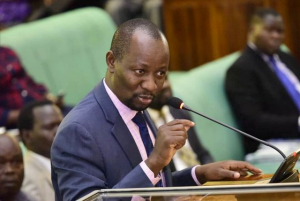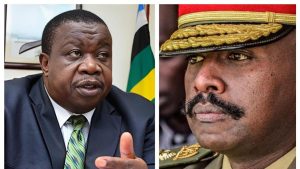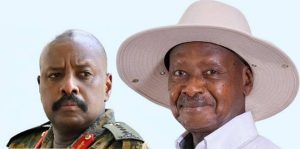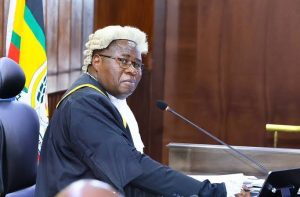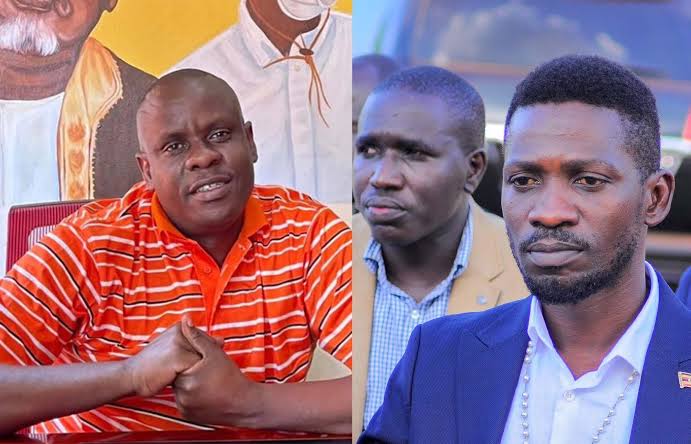
The political conversation in Uganda has once again taken a sharp turn after remarks made by Balaam Barugahara about Bobi Wine.
His statement, suggesting that Bobi Wine is “just a film star” making money in America, has sparked debate across political and social circles.
Balaam’s comments appear to question the seriousness of Bobi Wine’s political role.
By referring to him as a film star, he seemed to downplay his influence in Uganda’s political landscape and frame him more as an entertainer than a leader.
Bobi Wine, whose real name is Robert Kyagulanyi, first rose to prominence as a musician before transitioning into politics.
Over time, he has built a strong following, especially among the youth, positioning himself as a voice for change and reform.
The claim that he is making money in America adds another layer to the criticism.

It suggests that his activities abroad are more financially motivated than politically driven, a narrative that his critics have often pushed.
Supporters of Bobi Wine, however, strongly reject this view. They argue that his international presence is part of a broader effort to raise awareness about issues in Uganda, including governance, human rights, and democracy.
The statement by Balaam Barugahara has also reignited discussions about the role of diaspora engagement in politics. Many political figures travel abroad to connect with supporters and build international networks, and Bobi Wine is no exception.
For critics of the government, Balaam’s remarks are seen as an attempt to discredit a prominent المعارضة figure. They believe such statements are aimed at weakening Bobi Wine’s image both locally and internationally.
On the other hand, some government supporters agree with Balaam, arguing that Bobi Wine’s background in entertainment continues to shape his political approach. They believe his style often leans more toward performance than policy.
This clash of perspectives reflects the broader political divide in Uganda. The country’s political space is highly contested, with strong opinions on both sides of the spectrum.
Social media has played a major role in amplifying Balaam’s comments. Within hours, the statement spread widely, drawing reactions from Ugandans both at home and abroad.
Many users online have debated whether a background in entertainment disqualifies someone from being a serious political leader. History shows that individuals from various professions, including entertainment, have successfully entered politics.
The discussion also raises questions about how leaders are judged. Should their past careers define them, or should their current actions and policies be the main focus?
Bobi Wine’s journey from music to politics is often highlighted as an example of how diverse experiences can shape leadership. His supporters see his background as a strength rather than a weakness.
Meanwhile, Balaam Barugahara remains a significant figure in Uganda’s political scene, known for his outspoken views and active role in mobilization efforts. His statements often generate attention and debate.

The reference to America also points to the global dimension of modern politics. Leaders today operate not only within their countries but also on international platforms where they engage with a wider audience.
For many observers, this exchange is less about facts and more about narrative. Each side is trying to shape public perception in a way that supports its political goals.
The intensity of the debate shows how influential Bobi Wine has become. Even his critics acknowledge his ability to command attention and remain a central figure in political discussions.
At the same time, such statements highlight the need for respectful political dialogue. Personal attacks and dismissive language can shift focus away from important national issues.
As Uganda continues to navigate its political future, voices like those of Balaam Barugahara and Bobi Wine will remain influential. Their words and actions will continue to shape public opinion and political direction.
In the end, the question of whether Bobi Wine is a film star or a serious political leader is one that the public will ultimately decide. What remains clear is that he is a figure who cannot be ignored in Uganda’s evolving political landscape.