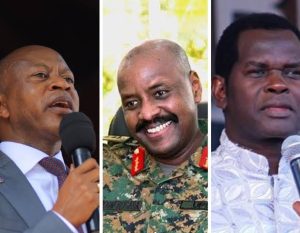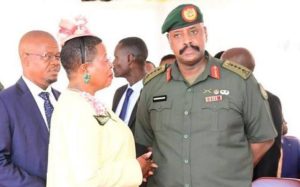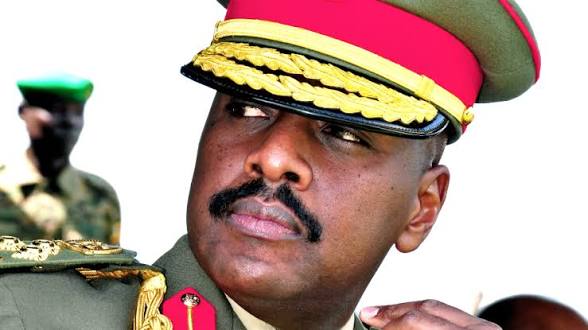
General Muhoozi Kainerugaba, Chief of Defence Forces, has sparked controversy with bold statements regarding religious leadership in Uganda.
He proposed that “fake pastors” and unregulated churches could face arrest if the Patriotic League of Uganda (PLU) takes power in future elections.
“You can be sure of one thing: the day PLU takes over government we will arrest ALL the fake pastors and churches all over the country!” Muhoozi wrote on his social media platform, X, earlier this week.
The general suggested that such religious leaders could face criminal charges under offences that include “insulting God,” signaling a tough approach to informal or unregulated ministries.
Muhoozi also proposed that anyone leading a church should hold at least a formal degree in theology, arguing that professional training would improve leadership standards.
The proposal has drawn comparisons to similar reforms in Rwanda, where the government has regulated religious institutions and enforced educational qualifications for pastors.
In Rwanda, 2018 reforms required pastors to possess at least an undergraduate degree in theology, and churches had to meet operational standards such as minimum membership and suitable infrastructure.

Enforcement in Rwanda intensified in 2024, with inspections of over 13,000 places of worship, resulting in the closure of thousands of churches that failed to meet legal or operational requirements.
The closures in Rwanda were mostly linked to non-compliance with registration rules, infrastructure standards, and the qualifications of religious leaders.
In 2025, Rwanda introduced further controls, including stricter financial compliance, tighter approval processes for new churches, and limitations on public religious gatherings and foreign preachers.
President Paul Kagame defended the reforms, explaining that they aimed to professionalize religious leadership and prevent exploitation of congregants by unqualified ministers.
Muhoozi’s statements in Uganda are likely to ignite debates, as churches play a central role in community life, education, and healthcare across the country.
Many Ugandans rely on religious institutions for social services, and previous attempts to regulate churches have often raised questions about religious freedom and state interference.
Critics argue that a crackdown on pastors without careful planning could lead to tension between the government and religious communities, potentially affecting millions of followers.

Supporters of Muhoozi’s proposal, however, may see it as an opportunity to ensure accountability and professionalism among religious leaders who have sometimes been accused of exploiting congregants.
The proposed theological degree requirement would mark a major shift in Uganda, where thousands of informal ministries operate without formal training or registration.
Muhoozi emphasized that the PLU’s approach would be comprehensive, targeting both individual leaders and institutions that fail to meet minimum standards.
Observers note that Uganda has a highly diverse religious landscape, with churches ranging from large denominations to small independent ministries, making enforcement potentially challenging.
The PLU leader’s comments are also likely to spark debate on the balance between regulation and freedom of worship, a topic that has historically been sensitive in Uganda.
As Uganda continues to grapple with issues of governance, professionalization, and public trust, Muhoozi’s proposal may generate further discussion on the role of the state in regulating religious practice.
While some see the plan as a means to protect believers from exploitation, others caution that heavy-handed measures could infringe on constitutional rights and provoke public resistance.