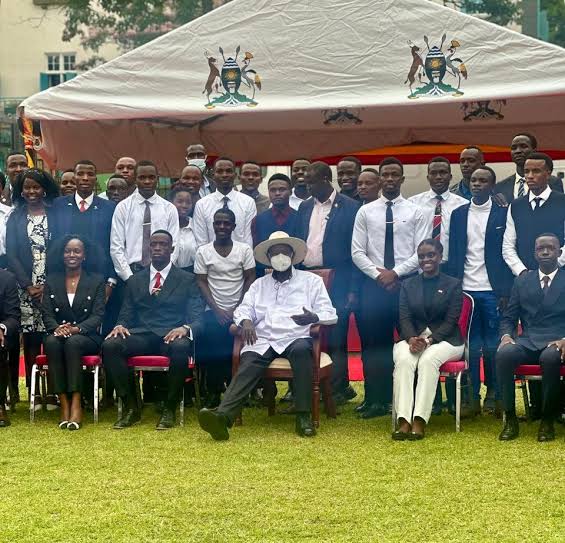
The end of the guild presidency of Churchill Ssentamu James at Makerere University has sparked debate among students, with some openly criticizing his leadership and questioning what he achieved during his time in office.
The criticism surfaced shortly after he publicly announced that his term as the 91st Guild President had officially come to an end.
Ssentamu took to social media platform X, formerly known as Twitter, where he posted a farewell message thanking the student community and the university administration for the support they offered during his tenure.
His message was intended to mark the conclusion of his leadership and reflect on the journey he had taken as the head of the student government.
In his post, Ssentamu expressed gratitude to the students who trusted him with leadership and to the members of his cabinet who worked alongside him throughout the term.
He described his team as committed and hardworking, saying they did everything possible to serve the interests of the student body.
“Presidential Term officially done. Big thanks to every Makerere student who trusted me, the administration that supported us and my unstoppable cabinet,” he wrote in the message that quickly circulated across various social media platforms.

Ssentamu further stated that his leadership team did not simply occupy positions of authority but worked diligently to make a difference within the university.
According to him, the guild government remained focused on building a better future for students during the entire period of their leadership.
“We didn’t just mark time, we made a difference and for now, goodbye. God bless you and God bless Makerere. We build for the future,” he added, signaling his departure from the office of the guild presidency.
However, what was expected to be a celebratory farewell message quickly turned into a heated discussion among students and social media users. Many students responded to the post with mixed reactions, with some praising his leadership while others strongly criticized his performance.
Among the critics was a social media user identified as Plato UG, who directly challenged the achievements of Ssentamu’s administration. The student questioned what tangible progress the university had experienced under the leadership of the 91st Guild government.
According to the student, one of the most memorable moments of Ssentamu’s tenure was when he appeared in a meeting with Yoweri Museveni, the President of Uganda. The meeting, which included a photo opportunity and discussions, had previously circulated widely on social media.
“The only thing you did was to sit with the President for a photo and tea then disappeared. Please show us what the university has achieved in your term,” the student wrote in a comment that quickly attracted attention online.
The remark sparked further debate among students, with several others joining the discussion to share their views about the outgoing guild president’s performance. Some echoed similar sentiments, arguing that they expected more visible achievements from the student leadership.
Others, however, defended Ssentamu, saying that the role of a guild president often involves negotiations and behind-the-scenes engagements that may not always be visible to the wider student community.
Supporters of the outgoing leader argued that student politics at Makerere can be complex and that certain initiatives take time before their impact becomes visible. They also pointed out that leadership challenges often go beyond what is publicly known.
The debate surrounding Ssentamu’s leadership reflects a broader conversation among students about the expectations they place on their elected representatives. Many students believe that the guild government should actively advocate for better academic services, improved welfare, and stronger student representation.
Ssentamu served as the 91st Guild President of Makerere University, a position historically associated with strong political influence and national attention. Over the years, several former guild leaders from the university have gone on to play important roles in national politics.
Because of this history, the guild presidency at Makerere is often viewed as more than just a student leadership position. It is widely considered a platform where future political leaders begin building their public profiles and leadership experience.

The end of Ssentamu’s tenure came after university authorities announced the dissolution of the guild leadership structures. This included both the guild cabinet and the Guild Representative Council.
The dissolution was carried out in accordance with the university’s guild statute, which requires the existing student leadership to step down as part of the transition process toward electing a new administration.
This process officially marks the beginning of preparations for the next electoral cycle at Makerere University. The upcoming elections will determine who will lead the 92nd guild government.
For many students, the transition period is an opportunity to reflect on the performance of the outgoing leadership and set expectations for the next group of student leaders.
As discussions continue across social media and within the university community, the legacy of Ssentamu’s tenure remains a topic of debate among students and observers alike.
While some believe his leadership made meaningful contributions behind the scenes, others argue that student leaders should ensure their achievements are more visible and directly beneficial to the student body.
With the stage now set for a new election cycle, attention at Makerere University is gradually shifting toward the candidates who will contest for the next guild presidency and the promises they will bring to the student community.