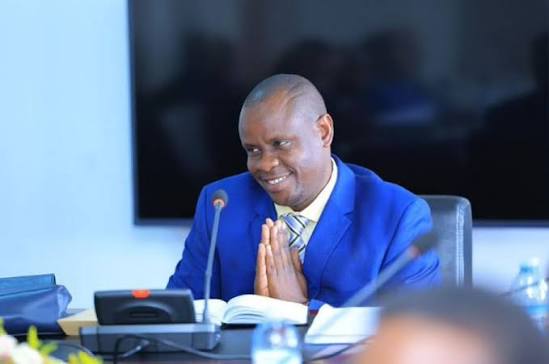
Hon. Balaam Barugahara, Uganda’s State Minister for Gender, Labour, and Social Development in charge of Children and Youth Affairs, recently made a surprising announcement that has captured the attention of many Ugandans.
In a brief but impactful chat with the media, Minister Barugahara openly revealed his personal burial preferences and shared his thoughts on the importance of making Wills.
The minister stated clearly that he wishes to be buried in Masindi and that he does not want his body to be taken to Nakasajja, Namasagali, or Kalisizo. This announcement immediately sparked conversations online and among the public.
Barugahara emphasized that most Ugandans fear making Wills because of a common belief that writing one invites death. He described this belief as a false superstition and encouraged citizens to overcome it.
At 46 years old, the minister revealed that he currently recognizes only three daughters: Kamukama, Kamusiime, and Karuhanga. He mentioned this while stressing the importance of transparency in family matters.
He explained that creating a Will is not a prediction of death but a responsible way to avoid confusion or disputes after one passes away. According to him, it is an act of love and care for one’s family.
“People are scared of making Wills because they fear it would bring death closer,” Barugahara said. “But it is just a Will. You write it and keep it safely.”

He reassured the public that he does not anticipate dying soon and expressed his faith that God has protected him and will continue to do so.
By making his own wishes public, the minister hopes to inspire Ugandans to be open about their own end-of-life plans. He wants citizens to normalize conversations around Wills and inheritance.
Barugahara believes that planning for the future is an essential part of responsible parenting and family care. A properly written Will ensures that children and loved ones are not left in disputes or confusion.
The minister’s announcement is unusual in Uganda, where public figures rarely discuss death or personal end-of-life preferences. This bold move has drawn both praise and curiosity from citizens.
Many social media users have applauded him for courageously breaking the silence on a topic considered taboo in many communities.
Legal experts note that having a Will is a practical safeguard, especially for public figures whose estates may be complex. Barugahara’s public call serves as a reminder of this responsibility.

Barugahara encouraged citizens to think beyond fear and consider the practical benefits of Wills. These include clarity in inheritance, smooth family transitions, and reduced chances of family disputes.
He stressed that even if one does not expect death in the near future, writing a Will is a necessary step that should not be postponed.
The minister also highlighted that sharing burial preferences with family members prevents confusion and ensures that one’s wishes are respected when the time comes.
For many Ugandans, Barugahara’s transparency is an eye-opener, showing that it is possible to address sensitive topics without negativity or superstition.
He urged Ugandans to embrace planning as a form of wisdom and care, rather than viewing it as a sign of bad luck or misfortune.
Barugahara’s message carries broader implications beyond personal preference; it touches on culture, family values, and responsible citizenship.
In conclusion, Hon. Balaam Barugahara’s public sharing of his burial wishes and call to normalize making Wills is more than a personal declaration—it is a lesson in courage, foresight, and responsibility. His actions may encourage other leaders and citizens to openly discuss matters that affect families and the future.