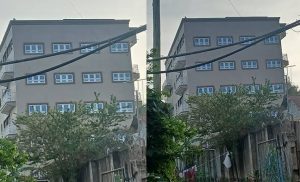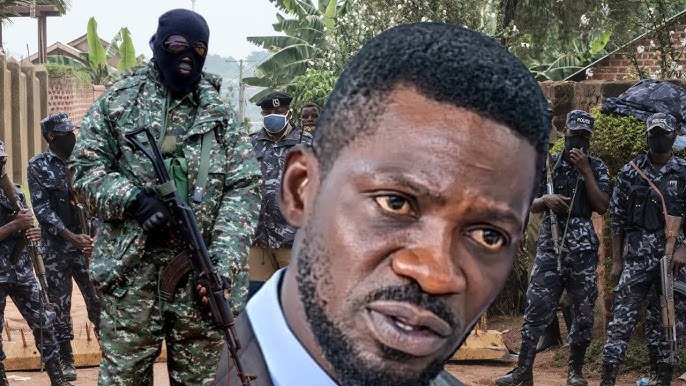
Police at Nateete are not involved in this incident, but in a separate and highly charged development, security forces have finally withdrawn from the home of Bobi Wine after 68 days of heavy deployment.
The long-running security presence at his residence in Magere had drawn widespread attention and concern from both local and international observers.
For more than two months, armed personnel had surrounded the property, creating an atmosphere of fear and uncertainty in the area.
Residents of Magere described the situation as tense, with movement restricted and access to the home tightly controlled by security operatives.
The deployment is said to have started around election day, a period already marked by heightened political tensions across Uganda.
Reports indicate that security forces intensified their operations shortly after, allegedly targeting opposition figures.
During this time, security personnel reportedly raided the home in an attempt to arrest Bobi Wine. However, he managed to escape before the operation was completed, leaving behind his wife, Barbie Kyagulanyi.

Eyewitness accounts claim that the raid turned chaotic, with property allegedly destroyed and members of the household mistreated. These claims have not been independently verified but have fueled public outrage and debate.
Allegations also emerged suggesting that the operation was carried out under directives from Muhoozi Kainerugaba, the Chief of Defence Forces. He later made comments on social media that appeared to acknowledge the actions of the security team.
At the same time, the government maintained a different position. Chris Baryomunsi, the Minister for ICT and National Guidance, publicly stated that Bobi Wine was not a wanted individual.
This created confusion among the public, as security forces continued to maintain a strong presence at the home despite official statements suggesting otherwise. The contradiction raised questions about coordination within government agencies.
Meanwhile, relatives of Bobi Wine attempted to access the property to check on its condition. However, they were reportedly denied entry and advised to seek permission from the Uganda Police Force.
The Inspector General of Police was also mentioned as having limited authority in the matter, further complicating the situation. This added to concerns about transparency and accountability in the handling of the case.
As the days passed, the heavy security presence remained unchanged, with officers stationed both inside and outside the premises. The continued deployment drew criticism from civil society organizations and legal bodies.
Among those raising concerns was the Uganda Law Society, which reportedly considered legal action to compel security forces to vacate the premises.
In a surprising turn of events, Bobi Wine later revealed through a video message that he had left the country. He stated that he would return after attending political engagements abroad.
His departure did little to change the situation on the ground, as security forces maintained their presence at his residence even after he was no longer in the country.
When questioned about this, the Deputy Inspector General of Police explained that the deployment was meant to protect the property from potential intruders or vandalism.

However, critics argued that the continued occupation of the home was excessive and unnecessary, especially in the absence of its owner.
The situation became a symbol of the broader political tensions in Uganda, particularly between the government and opposition groups.
After 68 days of uncertainty, reports have now confirmed that security personnel have finally vacated the premises in Magere.
Residents have welcomed the development, expressing relief at the return to normalcy after weeks of living under tight security conditions.
It remains unclear whether the withdrawal was voluntary or influenced by legal pressure, possibly from the Uganda Law Society or other stakeholders.
As the situation continues to unfold, many are watching closely to see what this development means for the country’s political environment and the future of opposition politics in Uganda.