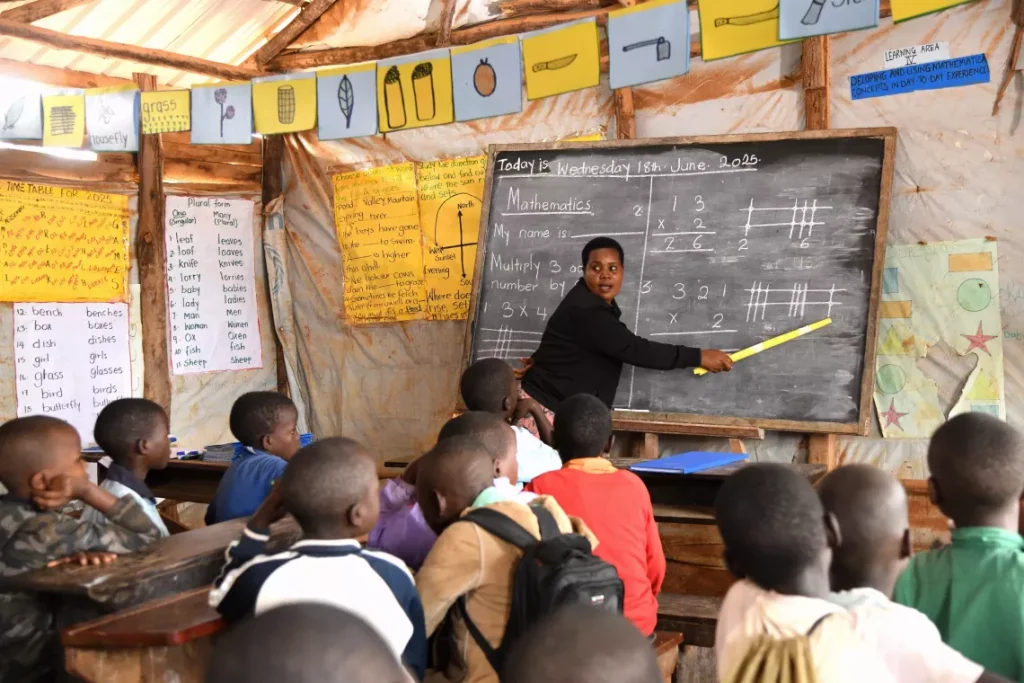
Ugandan pupils in lower primary could spend a maximum of three hours a day in structured learning under a new competency-based curriculum (CBC) expected to be introduced in 2028.
The curriculum, being developed by the National Curriculum Development Centre (NCDC), aims to align learning with children’s physical, emotional and cognitive development rather than keeping them in classrooms for long hours.
NCDC Acting Director Dr Patrice Ssembirige said children aged 3–4 would have a maximum of two hours of structured learning, while those aged 4–5 would spend about two to three hours. Children aged 5–6 would have approximately three hours.
“These children have to be engaged for about 15 to 30 minutes at a time,” Ssembirige said, arguing that there is no need for young children to report to school as early as 5am.
The new approach will emphasise physical development, language, cognitive skills, social interaction, emotional growth and practical activities.
The CBC is also intended to move learners away from memorisation and towards creativity, problem-solving and practical skills that can be applied in everyday life.
NCDC officials said the curriculum is still under review, with consultations involving teachers and other stakeholders before implementation. Learning materials will also undergo quality checks and approval before being released.
The reforms follow the introduction of CBC at lower secondary level in 2020, which has faced implementation challenges but has also seen learners develop innovative projects and practical solutions.
NCDC is also developing a new A-level curriculum designed to strengthen critical thinking, creativity and practical application of knowledge.