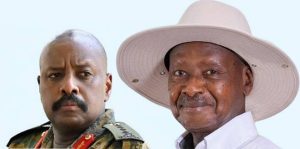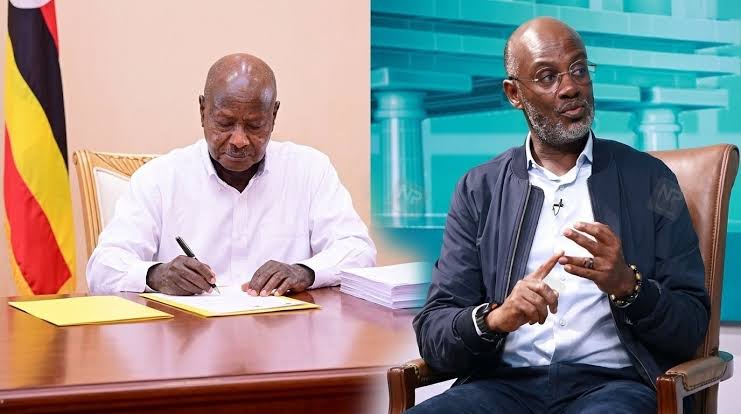
Journalist and political commentator Andrew Mwenda has publicly apologized to President Yoweri Museveni following controversial remarks in which he suggested that the Ugandan leader’s investment decisions were influenced by old age and possible senility. The apology has sparked fresh debate across political and media circles.
Mwenda, who is widely known as a close associate and longtime admirer of Gen Muhoozi Kainerugaba, admitted that he exceeded acceptable limits by attacking the President personally instead of focusing on policy disagreements.
The outspoken journalist made the apology through an article published in his publication, The Independent Magazine, where he reflected on the heated exchange that recently emerged between him and President Museveni.
The dispute began after Mwenda criticized some of the government’s investment decisions and suggested that the President was no longer capable of making sound judgments due to age. The comments triggered strong reactions from supporters of the ruling government and political observers.

President Museveni later responded sharply, describing Mwenda as a “do-nothinger” and accusing him of acting like a neo-colonial agent. The President’s lengthy response attracted national attention because of the unusual public disagreement between the two influential figures.
In his latest article, however, Mwenda praised Museveni for choosing intellectual engagement instead of using state power against him. He said many people had feared the President would retaliate harshly after the controversial comments.
Mwenda revealed that while traveling to Beijing, he received numerous phone calls from worried friends and associates who believed he might face arrest or intimidation because of his criticism of the President.
Despite those fears, Mwenda said Museveni’s decision to respond through writing instead of force demonstrated political maturity and intellectual confidence. According to him, the President treated the disagreement as a debate rather than a criminal matter.
“Museveni is a ferocious intellectual able to hold his own in a policy debate,” Mwenda wrote, while acknowledging that the President strongly disagreed with his views but still respected the exchange of ideas.
The journalist then directly addressed the controversial “senility” remarks, admitting they were unfair and inappropriate. He stated clearly that he regretted linking policy disagreements to the President’s age.

“The only place we disagree is on the choice of partners Uganda has selected. Where I went wrong, and to this I apologize to him without any reservations, is saying his decisions are because of his age,” Mwenda stated in the article.
He further explained that he has always opposed personal attacks in political debate and should have restricted his criticism to the strengths and weaknesses of government policies rather than making comments about age.
Mwenda also pointed out that his disagreements with Museveni on investment and industrial policy are not new. He recalled opposing some government-backed business initiatives dating as far back as 2003 and 2004.
He cited examples such as the Tri Star Apparels project, which failed, and BIDCO, which succeeded, arguing that his criticisms have always centered on economic strategy rather than personal hostility toward the President.
The journalist also shared an interesting encounter with billionaire philanthropist Bill Gates, who reportedly challenged his views regarding government support for private businesses in Africa.
According to Mwenda, Gates argued that African economies often struggle because entrepreneurs lack access to risk capital, making state intervention necessary in some cases to stimulate local business development.

Mwenda admitted that discussions with influential figures such as Gates helped him appreciate the complexity of investment decisions and economic development policies, even when disagreements remain.
In another surprising revelation, the veteran journalist also expressed regret over comments he previously made about certain Ugandan entrepreneurs whom he had harshly criticized in past writings.
He acknowledged that Museveni questioned whether he had fully listened to the perspectives of those businesspeople before publicly attacking them, prompting him to reconsider some of his earlier judgments.
The apology has since generated mixed reactions online, with some Ugandans praising Mwenda for showing humility and accountability, while others believe the public fallout reflects growing tensions within influential political and intellectual circles close to the government.