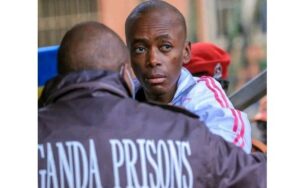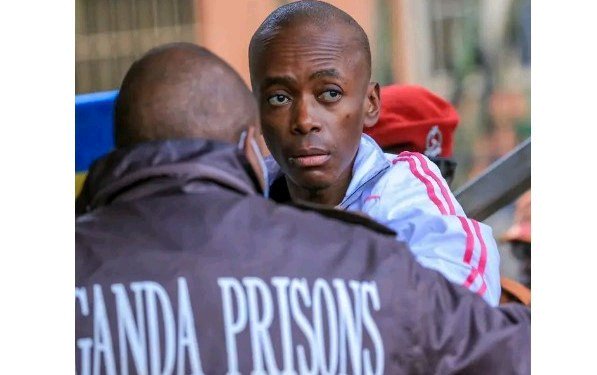
In a surprising turn of events during his trial for the brutal murders of four toddlers at Ggaba School, suspect Christopher Okello has taken the stand and made a chilling statement about his actions. Okello, who stands accused of orchestrating the deaths of several innocent children, has claimed that distress and “unseen forces” led him to commit the heinous crime, and that he never intended to kill the children. His defense is not only shocking, but it has also left many questioning the true extent of his involvement in the murders.
“I did not do those things willingly,” Okello told the court, his voice seemingly filled with regret and distress. “There were factors that were forcing me. I am a person of generally good moral character, hardworking, focused, and resourceful. I had a bright future, people to look after, and a business in the making. I could not do such a thing,” he continued. His emotional plea, however, has been met with mixed reactions from the public, legal experts, and the families of the victims.
The statement made by Okello paints a picture of a man who is grappling with the overwhelming weight of his actions. He insists that the murders were not premeditated, and that he was somehow influenced by external forces that pushed him into committing the crime. According to Okello, these forces were so powerful that they clouded his judgment and led him to act in ways that were completely contrary to his usual character.
His words suggest a profound internal conflict, with Okello seemingly unable to reconcile his actions with his self-perception as a morally upright person.
Okello’s defense also touches upon his self-image as a hardworking and resourceful individual who had everything to live for. He described himself as someone who had a promising future ahead of him—someone who was not capable of such brutal violence under normal circumstances.

His statement about being a person with “people to look after” and a business to run only deepens the complexity of his defense. Why, then, would someone with so much to lose resort to such extreme measures?
Many in the courtroom were left in disbelief at the contrast between Okello’s self-image and the horrific acts he is accused of committing. The public, who had been following the case closely, was equally shocked by the confession.
Some wondered if this was a genuine attempt at explaining his actions, while others suspected that Okello was merely trying to use his past character as an excuse for the murders. His emotional appeal to the court could very well be an attempt to gain sympathy and avoid the full consequences of his crimes.
At the core of Okello’s defense is the claim that unseen forces—likely referring to psychological distress, mental health issues, or other external pressures—drove him to murder. It is unclear whether Okello is suggesting that he was in a state of mental breakdown when he carried out the killings, or if he is alluding to some form of manipulation or coercion by outside influences. Nevertheless, his statement has brought into question his mental state at the time of the crime.
Legal experts have weighed in on Okello’s defense, pointing out that such claims of “unseen forces” can sometimes be used as a strategy to diminish the severity of a defendant’s actions. It is not uncommon for defendants in high-profile murder cases to argue that they were acting under duress, influenced by psychological factors or external pressures.
However, proving such a claim can be a challenging task. In Okello’s case, there will need to be a thorough investigation into his mental health history, personal life, and the circumstances surrounding the crime to determine whether these “unseen forces” were indeed a factor in his actions.

Psychologists have speculated that Okello’s defense could point to a possible mental health condition that influenced his behavior. If Okello was experiencing extreme distress or was under the influence of some form of psychological disorder at the time of the murders, this could have affected his decision-making ability and clouded his judgment.
However, the extent to which his mental health can be used as a defense remains to be seen, as the court will have to carefully examine all evidence, including expert testimony, before making any conclusions.
Despite Okello’s emotional statement, the families of the victims—whose children were brutally killed in the Ggaba school attack—are still seeking justice. The pain and anguish of losing innocent lives cannot be so easily dismissed by claims of distress or external forces.
For these families, no explanation can bring back their children or heal the wounds inflicted by such a senseless act of violence. Many of them are struggling to understand how someone they had never suspected of being capable of such violence could commit such a horrific crime.
As Okello continues to defend his actions in court, the question remains: can a person with a “good moral character” really be driven to murder by unseen forces, or is there something more sinister at play? The court must grapple with this difficult question, weighing Okello’s claims against the facts of the case, and ultimately determining whether he will be held accountable for the deaths of the four toddlers.
Some have expressed skepticism about Okello’s defense, suggesting that he is using his past image as a hardworking, moral individual as a way to garner sympathy and soften the public’s view of him.
There are those who believe that Okello’s actions were premeditated, and that his claims of distress are nothing more than a tactic to avoid the full legal consequences of his crime. The fact that he has admitted to the killings, but insists that he did not act willingly, makes it all the more complicated for the court to determine the true nature of his actions.
The psychological evaluation of Christopher Okello will likely play a significant role in the ongoing trial. Experts may be called upon to assess his mental state at the time of the murders and determine whether he was suffering from any conditions that could have influenced his behavior. His defense may hinge on the argument that Okello was not in control of his actions due to factors beyond his comprehension, such as emotional distress or psychological breakdown.
In the meantime, the public remains divided on Okello’s claims. Some view his defense as a genuine attempt to explain a tragedy, while others are unconvinced by his narrative.

Regardless of the outcome, the case has sparked a wider conversation about the complexities of human behavior, mental health, and the factors that drive individuals to commit violent acts.
As the trial unfolds, many are watching closely to see how the court will weigh Okello’s claims against the evidence presented. The families of the victims, too, are waiting for closure, hoping that justice will be served, and that Okello will be held accountable for the deaths of their loved ones. What is clear, however, is that Okello’s defense has raised more questions than answers, and the court will have to carefully consider every piece of evidence before reaching a final verdict.
Ultimately, the case of Christopher Okello serves as a stark reminder of the complexities of human behavior and the challenges of understanding why people commit such horrific acts.
His defense, which hinges on distress and external forces, may be an attempt to explain his actions, but it does not erase the brutal reality of the crime he is accused of committing. The journey to justice is far from over, and the truth behind Okello’s actions may yet unfold in the coming weeks.