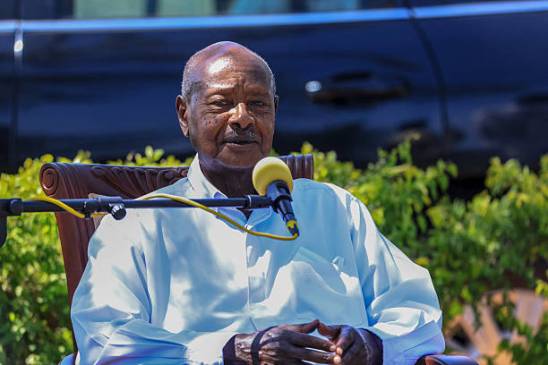
In a surprising statement that has drawn mixed reactions, President Yoweri Kaguta Museveni of Uganda addressed Kenyans on the rising fuel prices in the region, telling citizens that if fuel is expensive, they should simply stay at home. Speaking candidly about the economic challenges facing many African countries, Museveni highlighted the need for individuals to adjust their habits and prioritize their financial reality, emphasizing that traveling or engaging in unnecessary activities would only further strain limited resources.
“If fuel is expensive, don’t travel; just stay at home. If you don’t have money, where are you going?” he remarked during his speech, which quickly went viral on social media and attracted a flurry of debate.
The Ugandan president’s remarks come at a time when many African nations are grappling with rising fuel prices, inflation, and economic uncertainty. Like much of the continent, Kenya has faced significant hikes in fuel costs, which have had a ripple effect on the cost of living, transportation, and goods. These challenges have sparked public discontent, with many people struggling to make ends meet and finding it harder to afford basic necessities, including fuel for their vehicles. Museveni’s response, however, was direct and focused on practical advice, although it did not resonate well with everyone.
In his speech, Museveni offered a blunt, no-nonsense approach to the reality of the current economic climate. He suggested that, given the high cost of fuel, citizens should rethink their travel habits and consider staying at home if they do not have the necessary funds. The president’s comment about not going anywhere without money seemed to reflect his broader stance on economic self-sufficiency and personal responsibility.
He stressed that, rather than lamenting over fuel prices or hoping for external help, individuals should take ownership of their financial decisions and adapt to the circumstances they are facing.

For some, Museveni’s statement was seen as an attempt to encourage Kenyans to embrace frugality in difficult times. The idea of “staying home” in response to high fuel prices could be interpreted as a call to reduce unnecessary spending, avoid waste, and focus on essential needs.
The president’s suggestion to prioritize what really matters in such challenging economic times resonated with those who believe that individual responsibility is key to surviving and thriving amid financial difficulties.
However, the response to Museveni’s words was far from unanimous. Critics of the president’s suggestion argue that it oversimplifies the complex issues people are facing, especially in cities and towns where commuting is often necessary for work and livelihood.
For many, traveling is not a luxury but a necessity—whether it is for daily employment, taking children to school, or fulfilling other family responsibilities. In this light, telling people to simply stay at home may come across as out of touch with the realities of everyday life for many ordinary citizens.
Many Kenyans took to social media platforms to voice their opinions on Museveni’s statement, with some expressing frustration at the lack of empathy in the president’s words. One social media user responded by saying, “It’s easy to say stay at home when you have the means to stay at home.
For many of us, we have to go to work to put food on the table.” Others questioned whether Museveni’s advice applied only to those who could afford to stay at home without suffering financially, or whether it was an unrealistic suggestion for the majority of the population who are already living paycheck to paycheck.

Further complicating the issue is the broader context of fuel pricing and its economic impact on transportation and trade. In many parts of East Africa, fuel is not just a commodity for personal use—it is also integral to the functioning of businesses, logistics, and the movement of goods. The rising cost of fuel has caused prices for essential goods and services to soar, leading to inflation and increased living costs. In this context, simply staying at home may not address the underlying problem of rising prices and may fail to offer a sustainable solution to the economic challenges faced by households.
Economists have also weighed in on the matter, stating that while Museveni’s advice may be well-intentioned, it does not address the structural issues driving high fuel prices and inflation in the first place. Many have pointed out that rising global oil prices, combined with local factors such as supply chain disruptions and government taxes, are largely responsible for the increases in fuel costs. Without addressing these systemic issues, such as the development of alternative energy sources, improved public transportation, and better energy policies, the suggestion to simply “stay home” may not provide lasting relief for the majority of citizens.
While some have embraced the idea of cutting back on unnecessary travel, others have called for a more comprehensive solution to the fuel crisis. For example, calls for increased investment in public transportation systems or the development of affordable and sustainable energy alternatives have been echoed by many experts. These alternatives, they argue, would provide long-term solutions to fuel dependency, particularly for those who are unable to afford the rising costs of gasoline.
In addition to fuel prices, many Africans are also dealing with the economic consequences of the COVID-19 pandemic, which has further strained economies that were already struggling. Unemployment rates remain high in many areas, and businesses are still recovering from the economic downturn caused by lockdowns, restrictions, and disruptions to global trade. The situation is further compounded by the political challenges faced by many African governments, which are trying to balance economic recovery with social stability.
Museveni’s call for self-reliance and personal responsibility could be seen as part of a broader strategy to encourage economic resilience among East Africans. His emphasis on staying at home during tough times may be an effort to inspire citizens to rethink their spending habits, conserve resources, and focus on rebuilding local economies. At the same time, his message also underscores the need for better policy solutions and investments in infrastructure that can help mitigate the negative impacts of rising fuel prices and inflation.
Some observers have interpreted Museveni’s comments as a reflection of the growing frustration among African leaders regarding the economic strain caused by external factors, such as global inflation, supply chain challenges, and fluctuating commodity prices.
While African countries are not immune to global economic pressures, there is also a sense that governments need to take more decisive steps to build sustainable, long-term solutions to fuel dependency and energy insecurity.
In response to Museveni’s statement, the Ugandan government has suggested that it is exploring avenues to help mitigate the high cost of fuel within the region, including engaging with international oil suppliers, exploring energy diversification, and considering more affordable alternatives for public transportation.

However, these measures will take time to implement, and for now, many Kenyans and Ugandans are left to grapple with the immediate effects of rising fuel prices.
As the debate continues to unfold, it remains clear that Museveni’s remarks have sparked a necessary conversation about the future of Africa’s energy and transportation sectors.
While staying home may seem like a short-term solution for some, it is evident that longer-term structural changes are needed to address the root causes of high fuel prices and ensure that Africans have access to affordable, sustainable energy solutions in the future.
For now, as Museveni’s message circulates, citizens across East Africa will continue to navigate the challenges of rising fuel prices, economic pressures, and uncertain futures.
The conversation sparked by his comments serves as a reminder that in the face of global economic changes, Africa must find innovative solutions to ensure economic stability and prosperity for all its citizens.