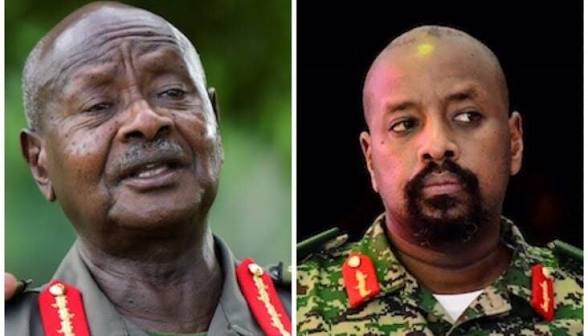
A new political debate is gaining momentum in Uganda as Muhoozi Kainerugaba calls for a major shift in leadership. The senior military officer has openly urged his father, Yoweri Museveni, to remove older officials from key government positions and replace them with younger leaders.
Muhoozi’s statement has sparked conversations across the country. Many people, especially the youth, are now discussing whether it is time for a generational change in Uganda’s leadership structure.
The issue came into the spotlight after Muhoozi made a recent appointment. He selected a relatively young officer, Deo Akiiki, to serve as Uganda’s military attaché in Washington, D.C.
This appointment was seen as a sign of his preference for younger individuals in important roles. It also reflected his belief that fresh energy and new ideas are needed in leadership positions.
After making the appointment, Muhoozi expressed concern about the age of many Ugandan ambassadors. He pointed out that some have been in their positions since 1986, which he believes is too long.
He questioned how it is possible for individuals to hold diplomatic roles for decades without change. According to him, such long tenures do not reflect the reality of a country where most citizens are young.
The year 1986 is significant in Uganda’s history. It is when President Museveni came to power after a long bush war, marking the beginning of his leadership.

Muhoozi highlighted that during that time, he himself was just a child. Today, many Ugandans were not even born in 1986, yet they are governed by leaders from that era.
This has led him to argue that leadership should better represent the current population. He believes that young people should have a stronger voice in shaping the country’s future.
Muhoozi also compared Uganda to Rwanda. He noted that Rwanda has one of the youngest diplomatic teams in Africa, which he sees as a positive example.
According to him, younger diplomats bring more energy, innovation, and connection to modern global trends. He believes Uganda can benefit from a similar approach.
His proposal goes beyond ambassadors. He has called for changes in the cabinet and other government positions as well, suggesting that young people should take up most of these roles.
In fact, Muhoozi suggested that the next government should be made up of about 80% young leaders. This bold idea has drawn both support and criticism.
Supporters argue that Uganda is a youthful country and should be led by people who understand the challenges and dreams of the younger generation. They see this as a step toward progress.

Critics, however, warn that experience is also important in leadership. They believe that removing older leaders completely could lead to a loss of valuable knowledge and stability.
Meanwhile, President Museveni continues to play a central role in the country’s politics. Having recently been re-elected, his leadership is expected to extend further into the future.
As discussions continue, there are also talks about who could become the next vice president. Names such as Norbert Mao have been mentioned alongside Muhoozi himself.
This adds another layer of complexity to the political landscape. Decisions about leadership are becoming more important as the country looks ahead to the future.
The debate also reflects a broader question: how should countries balance experience and innovation in leadership? It is a challenge that many nations face, not just Uganda.
For now, Muhoozi’s comments have clearly stirred national attention. Whether or not his ideas will be implemented remains to be seen.
What is certain is that the conversation about youth involvement in governance is growing stronger. Many Ugandans are watching closely to see what changes may come next.