The tragic events at a daycare center in Kampala have left many people in shock and deep sadness. The incident has raised serious questions about safety, mental health, and how warning signs can sometimes be missed.
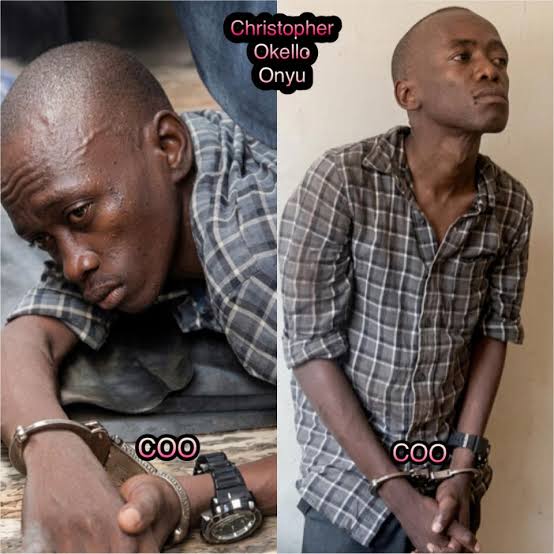
At the center of the story is Christopher Okello Onyum, a 39-year-old man whose past appears as troubling as the crime itself.
Onyum managed to gain access to the Gaba Early Childhood Day Care Centre, located in Kampala. Reports suggest that he pretended to be a parent who wanted to enroll a child. To make his story believable, he even paid part of the school fees, showing how carefully he planned his actions.
This detail has surprised many people. Paying school fees made him appear genuine and trustworthy. It allowed him to move freely around the school without raising suspicion. This has led to concerns about how institutions verify visitors and protect children.
Before the tragic day, Onyum had reportedly visited the area several times. He was seen at a nearby internet café and around the school. These visits are believed to have helped him study the environment and prepare his plan.
On the day of the incident, he traveled by taxi from his rented home in Kyanja. Along the way, he stopped at the Old Taxi Park, where he bought sharp knives. This shows that his actions were not random but carefully thought out.
He also carried new padlocks with him. These were later used to lock parts of the school, making it harder for people to escape or intervene quickly. This added another layer to the planning behind the attack.

The victims were very young children, aged between one and a half to two and a half years. Their names—Ryan Odeke, Keisha Otim, Gideon Oteko, and Ignatius Sseruyange—have become a symbol of innocence lost. Their deaths have deeply affected families and the wider community.
As more details emerge, Onyum’s past has come into focus. Years earlier, in 2017, he was arrested in the Kwania area after being linked to the death of his stepmother. This earlier incident shows that there were serious warning signs.
At that time, investigations suggested that he might have been dealing with a mental health condition linked to sickle cell complications.
However, recent findings suggest that mental illness may not fully explain the recent events.
One of the most confusing parts of his story is how he left Uganda after the 2017 case. There are no clear records explaining how he was released and allowed to travel to the United States.
In the U.S., Onyum lived in Northern Virginia with relatives. He even worked as a caregiver in an elderly home. This part of his life appears calm and stable, which contrasts sharply with what later happened.
Last year, he returned to Uganda. Interestingly, he did not immediately inform his father, Asuman Onyum, about his return. This raised concerns about his intentions and state of mind.
When father and son finally met, Onyum said he no longer liked life in America. He expressed a desire to settle in Uganda and start farming on family land in Nwoya District.
His father supported him and helped him begin this new chapter. A farm was set up, and it seemed like an opportunity for a fresh start. However, this hope did not last long.

After only a few weeks, Onyum abandoned the farm. Without informing anyone, he returned to Kampala. There, he rented a house in Kyanja and lived quietly.
During this time, he appeared to be planning something serious. His repeated visits to the daycare and his preparation of tools suggest that he was not acting on impulse.
Some reports suggest that his return from the U.S. might have been influenced by immigration policies linked to Donald Trump. However, this remains unclear and has not been confirmed.
What is clear is that the incident has sparked national concern. People are asking how someone with such a history was able to move freely and plan such an act without being stopped.
The tragedy has also highlighted the importance of stronger security measures in schools, especially those caring for very young children. Many are calling for stricter background checks and better visitor control systems.
Beyond security, the case raises deeper questions about mental health support, family intervention, and community awareness. It shows how unresolved issues can grow into serious dangers if not addressed early.
As Uganda mourns the loss of innocent lives, this story stands as a painful reminder. It calls for action, reflection, and a commitment to protecting the most vulnerable members of society.