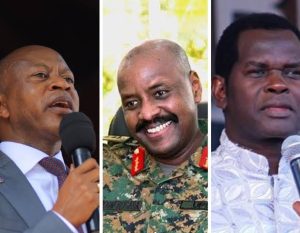
A recent statement attributed to Muhoozi Kainerugaba has drawn attention for its conciliatory tone and emphasis on unity. In his remarks, he expressed continued admiration and affection for his uncle, highlighting the importance of family ties even amid broader political or social differences. The message has been interpreted as one of reassurance and diplomacy.
Referring to his uncle as “Afande Paul,” a respectful military title, the statement carries both personal and cultural significance. The use of such language reflects deep-rooted traditions of respect within Ugandan society and the military establishment. It also underscores the closeness of their relationship.
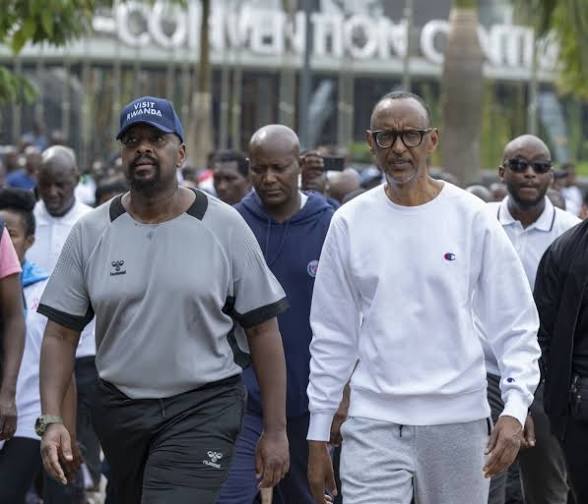
The mention of “uncle” is widely understood to refer to Paul Kagame, the President of Rwanda. The familial connection between the two leaders has often been a point of interest in regional politics. Their relationship symbolizes broader ties between their respective nations.
Uganda and Rwanda have historically shared both cooperation and tension. While the two countries maintain strong cultural and economic links, their political relationship has experienced periods of strain. Statements like this one are therefore closely scrutinized.
By emphasizing love and admiration, Gen Muhoozi appears to be reinforcing a message of goodwill. Such language can play a role in easing tensions and promoting dialogue. It signals a willingness to prioritize relationships over conflict.
The statement also acknowledges that “issues” may arise between peoples. This recognition of اختلافات suggests an awareness of existing challenges. However, the emphasis remains on resolving them peacefully.
The commitment to “friendly and amicable” resolution is particularly significant. It reflects a diplomatic approach that values الحوار over confrontation. In a region where disputes can escalate, such messaging is important.

Observers have noted that personal relationships often influence political dynamics in East Africa. Family ties, historical connections, and shared experiences can all shape interactions between leaders. This statement highlights that reality.
At the same time, the remarks may be seen as a strategic effort to maintain stability. Public affirmations of goodwill can help manage perceptions and reduce uncertainty. They provide reassurance to both domestic and international audiences.
The use of the phrase “as peoples” broadens the scope of the message. It shifts the focus from individual leaders to the populations they represent. This inclusive language emphasizes collective responsibility for peace.
In addition, the statement reflects an understanding of the importance of communication. Clear and positive messaging can help prevent misunderstandings. It also sets the tone for future interactions.
Regional stability in East Africa depends heavily on cooperation between neighboring countries. Uganda and Rwanda play key roles in this regard. Their relationship has implications for trade, security, and التنمية.
The emphasis on amicable resolution aligns with broader efforts to promote peace in the region. Diplomatic engagement and الحوار are widely seen as essential tools. Statements like this contribute to that process.

Public reaction to the remarks has generally been attentive. Many see it as a positive signal of continued engagement. Others remain cautious, noting that words must be matched by actions.
The historical context of Uganda-Rwanda relations adds depth to the statement. Past tensions have sometimes led to border closures and diplomatic disputes. This makes expressions of goodwill particularly meaningful.
At the same time, the personal dimension of the message should not be overlooked. Expressions of love and admiration are not typical in formal political communication. Their inclusion adds a human عنصر to the statement.
The reference to resolving issues suggests an ongoing process rather than a one-time effort. It acknowledges that challenges may persist but can be addressed constructively. This forward-looking perspective is महत्वपूर्ण.
Observers will likely watch for follow-up actions that reinforce the message. Diplomatic meetings, agreements, or joint initiatives could further demonstrate commitment. Such خطوات would strengthen the credibility of the statement.
The role of leadership in shaping العلاقات is crucial. Leaders set the tone for how countries interact. Positive messaging can encourage cooperation at multiple levels.
Ultimately, the statement serves as a reminder of the importance of dialogue, respect, and shared interests. It highlights the potential for resolving differences through peaceful means. In a complex regional landscape, such messages carry significant weight.