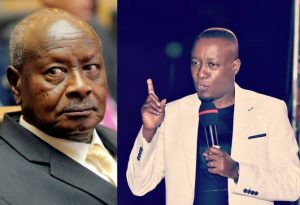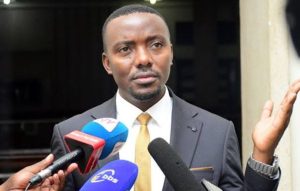
Uganda’s political landscape has taken an interesting turn as former Leader of Opposition in Parliament, Mathias Mpuuga Nsamba, laid down strict conditions for joining President Yoweri Museveni’s National Resistance Movement (NRM) government.
His statements have sparked discussion among both political analysts and the general public.
Mpuuga, who leads the Democratic Front (DF), appeared on Radio Simba’s Olutindo political talk show and explained that any move to join the NRM must follow a structured and transparent procedure. He emphasized that decisions should not be rushed or appear opportunistic.
According to Mpuuga, any agreement must be in writing. He stressed that neither he nor the DF make spontaneous one-day decisions as if they were seeking a job or personal gain.
This approach reflects his focus on long-term political strategy rather than short-term benefits.
He added that all negotiations must be conducted openly, with all relevant stakeholders present.
Transparency, he argues, is key to ensuring that political engagements are credible and accountable.

Mpuuga also said that any agreement must include a clearly defined lifespan, specifying when it begins and when it expires. This, he believes, ensures clarity and prevents misunderstandings between the DF and the NRM.
He insisted that the government he joins should be a coalition established to achieve specific national goals. For him, joining the government is not about personal position but about contributing to meaningful change for Uganda.
Mpuuga outlined several priorities for such a coalition government. These include revising electoral laws, promoting the rule of law, fighting corruption, and ensuring that all Ugandans can benefit from national resources without discrimination.
He compared the current situation with past events, noting that former Democratic Party (DP) president Paul Kawanga Ssemogerere joined Museveni’s government in 1986 for national interest reasons. Mpuuga stressed that any engagement today must follow a similar principle of national benefit.
He contrasted Ssemogerere’s approach with that of current DP president Norbert Mao, who he claims joined the government mainly for personal gain. Mpuuga suggested that Mao’s participation did little to advance electoral reforms or meaningful governance.
Recently, rumors have circulated that Mpuuga and other opposition leaders may be in talks with Museveni to join his government. Sources indicate that various opposition politicians are lobbying for positions, including Resident District Commissioners (RDCs), ministers, and other influential roles.
Mpuuga, however, clarified that anyone joining Museveni’s government without following a structured process would do so at their own risk and not under the party’s mandate. He emphasized party discipline and the importance of collective decision-making.
He also criticized Robert Kyagulanyi Ssentamu, popularly known as Bobi Wine, for weakening opposition unity. According to Mpuuga, Bobi Wine’s leadership shifted the opposition’s focus from challenging Museveni to attacking other opposition leaders.
Mpuuga accused Bobi Wine and his associates of branding other opposition members as spies, which he claims has damaged the opposition movement. He highlighted that this internal conflict diverted energy away from holding the government accountable.
He expressed disappointment at seeing Bobi Wine and the current Leader of Opposition in Parliament, Joel Ssenyonyi, collaborate with NRM legislators to oppose electoral reforms he introduced. These laws were aimed at cleaning up Uganda’s election processes.

Mpuuga believes that Museveni benefits from the divisions caused by Bobi Wine’s actions. He claims that the weakening of the opposition makes it easier for the ruling government to maintain control.
Despite these challenges, Mpuuga and other genuine opposition leaders have reportedly returned to the drawing board. They are strategizing new ways to challenge Museveni’s government and restore effective opposition leadership.
The DF itself was formed by Mpuuga and other political figures who rejected Bobi Wine’s offer to apologize over the controversial Shs500 million service award. They viewed the offer as insincere and politically motivated.
Mpuuga characterized the award as corruption and argued that it was wrong for the NUP boss to attempt to use it as leverage to influence opposition leaders. He insisted that ethical standards and integrity must guide political decisions.
His position sends a strong signal that joining the government is conditional, principled, and focused on national interest. He remains firm that personal gain or shortcuts should not dictate political alliances.
Observers note that Mpuuga’s statements may influence other opposition leaders who are considering collaboration with the NRM. His insistence on transparency, structured agreements, and national priorities could reshape how opposition politics operates in Uganda.
Finally, Mpuuga’s remarks highlight the tension between opportunistic politics and principled leadership. As the country prepares for future political developments, his tough conditions may set a precedent for how opposition parties engage with the ruling government.