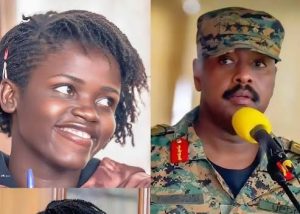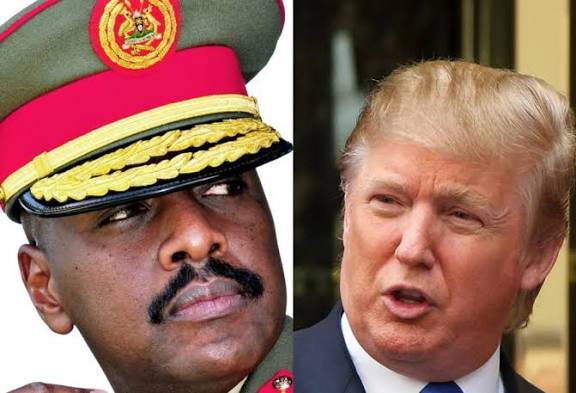
United States Senator Jim Risch, who chairs the influential Senate Foreign Relations Committee, has openly criticized Uganda’s Chief of Defence Forces, General Muhoozi Kainerugaba, over recent comments he made about America.
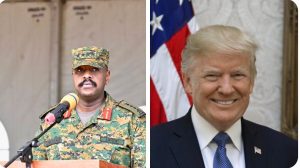
In a strongly worded statement on Friday, January 30, Senator Risch said that General Muhoozi had “crossed a red line” and that his behavior was far more serious than what could be corrected with deleted messages and an apology. The senator’s remarks have sparked intense debate among diplomats, policy experts, and ordinary citizens in both the United States and Uganda.
General Muhoozi, who is the son of Uganda’s president, Yoweri Museveni, took to social media earlier last week to make accusations against the United States. He claimed that the US Embassy in Kampala was involved in helping Ugandan opposition leader Robert Kyagulanyi Sentamu, popularly known as Bobi Wine, to escape from the country.
These tweets quickly went viral, capturing the attention of both international media and government officials in Washington.
The allegation created an instant diplomatic stir. Accusing a major world power of interfering in domestic politics is a serious claim, and when such a claim comes from the head of the Ugandan military, it carries additional weight.
Military leaders are usually expected to act with caution in matters that could affect international relations, but General Muhoozi’s comments were seen by many as bold and potentially harmful.
Moments after posting his initial statements, General Muhoozi deleted the tweets and issued an apology. In his apology, he stated that the information he had received was incorrect and that he had already discussed the matter with the US Ambassador to Uganda, William Popp. He said the conversation had “cleared the air,” and reaffirmed that military cooperation with the United States would proceed as usual.

Despite the apology, Senator Risch made clear that he believed the matter was too serious to be dismissed so easily. In his statement, he went further than merely questioning the accuracy of the tweets; he called on the United States government to review its entire security partnership with Uganda. This includes looking at joint military cooperation as well as the possibility of imposing sanctions on General Muhoozi.
“The president’s son, and likely successor, cannot just delete tweets and issue hollow apologies,” Risch said. “The United States will not tolerate this level of instability and recklessness when American personnel, US interests, and innocent lives in the region are at stake.” This language underscores the gravity with which the US Senate views the situation.
Senator Risch’s concern is rooted in Uganda’s strategic role in East Africa. For many years, Uganda has been a partner to the United States in regional security efforts, especially in Somalia where both countries participate in stabilisation missions. A breakdown in cooperation could affect ongoing operations against extremist groups and jeopardize broader regional peace efforts.
By suggesting that the United States re-evaluate its military cooperation with Uganda, Risch is urging Washington to consider whether it can continue trusting Kampala as a reliable partner. This is not a trivial suggestion; a change in military relations could have deep implications for Uganda’s defence strategy, its regional role, and its access to foreign military aid.
In response to the senator’s statement, some analysts have pointed out that diplomatic relations often survive far more serious disputes than a few ill-timed social media posts. However, they also stress that General Muhoozi’s position as head of the military, and his close connection to the Ugandan presidency, make his statements especially significant.
Ugandan political commentators have reacted with a mix of concern and defiance. Some argue that Western criticism is nothing new and that Uganda must assert its sovereignty without fear of sanctions or pressure. Others believe that the incident could have been handled more carefully by Ugandan leaders to avoid escalation.
The apology from General Muhoozi attempted to calm tensions. In a brief statement, he said, “I want to apologise to our great friends, the United States, for my earlier tweets that I have now deleted. I was being fed wrong information. I have spoken with the US Ambassador to our country, and everything is okay. We are going to continue our military cooperation as usual.”
For Washington, however, the episode has raised questions about military discipline and political influence within Uganda’s armed forces. When a high-ranking military commander makes public claims about another country’s role in internal affairs, it can be seen as blurring the line between military duty and political messaging.
Critics of General Muhoozi’s actions argue that his conduct demonstrates a lack of restraint and judgment that is expected of someone in his powerful position. They contend that military leaders, especially those with political influence, must be extremely careful in what they communicate publicly.
Senator Risch’s remarks also reflect a broader concern in Washington about leaders who wield both military and political power. As speculation grows about General Muhoozi’s political ambitions, some American officials worry that his dual role could contribute to internal instability in Uganda.
Bobi Wine, the opposition leader mentioned in the tweets, has been a central figure in Uganda’s political landscape for years. While the latest developments involving him did not originate from his own actions, he has become entangled in this controversy simply because his name was referenced by the military chief.

In diplomatic circles, there is a tendency to view apologies as useful, but not always sufficient, to mend strained relations. Senator Risch’s insistence that deleted tweets and apologies are inadequate shows a belief that formal actions and commitments may be required to reaffirm trust.
It remains unclear whether the United States government will take any formal steps in response to the senator’s call. Decisions regarding sanctions or changes in military cooperation typically involve multiple branches of government and careful deliberation.
For now, Uganda and the United States have both signaled a desire to maintain their long-standing security partnership. Continued dialogue and diplomatic engagement could help ease tensions if both sides choose to prioritize cooperation.
However, the incident has already sparked significant conversation about the role of social media in diplomacy. Tweets and posts from public officials can spread rapidly and produce effects far beyond what was intended, particularly when sensitive international matters are involved.
The controversy surrounding General Muhoozi’s tweets highlights the challenges of communication in the digital age. What might have once been a private conversation between diplomats has now become a public dispute echoed across international news outlets.
In the coming weeks, observers will be watching closely to see how this situation unfolds. Whether the United States adjusts its approach to its relationship with Uganda remains to be seen, but it is clear that General Muhoozi’s actions have had a significant impact on diplomatic discussions at the highest levels.
The world will be watching to see if cooler heads prevail and if both countries can reaffirm their shared goals for peace and security in the region. For now, the debate continues — and the consequences of this episode may extend far beyond a few deleted tweets