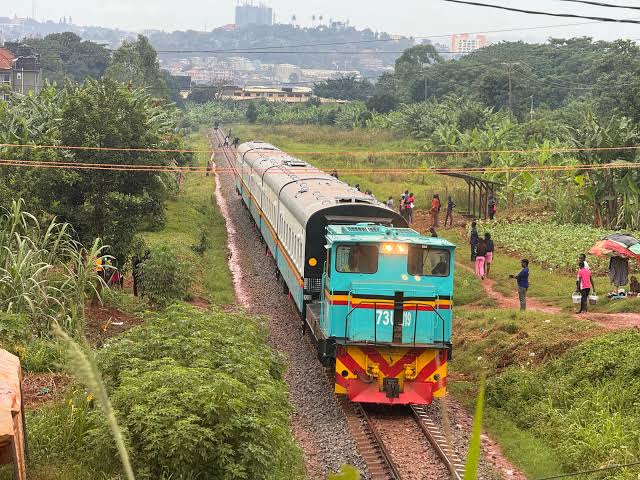
The Uganda Railways Corporation (URC) has unveiled bold plans to introduce a new passenger train network connecting Bujuuko, Kyengera, Kampala, Port Bell, and Mukono, aiming to revolutionize urban travel and tackle congestion in the Greater Kampala Metropolitan Area.
URC Managing Director Benon Kajuna stated that a European Union-backed feasibility study confirmed the project’s technical and economic viability. The design proposes a single-track line from Bujuuko to Kyengera, while the busier Kyengera–Mukono stretch will feature a double-track system to accommodate rising commuter demand.
“We now have the data and a clear roadmap to roll out a passenger rail line from Bujuuko through Kyengera and Kampala to Mukono. The double line from Kyengera to Mukono is crucial for handling peak traffic efficiently,” Kajuna said.
Initially, the service will use diesel multiple unit (DMU) trains, with a transition to electric multiple units (EMU) in a later phase, promising cleaner energy use and improved service reliability. The plan also calls for the removal of Kampala’s level crossings to enhance safety and operational efficiency.
To fund the initiative, URC is in talks with development financiers such as the European Investment Bank, World Bank, French Development Agency (AFD), and the European Union. The project aligns with the government’s urban decongestion strategy, led by a cabinet subcommittee under the Ministry of Works and Transport.
Passenger rail services will be subsidized, reflecting the government’s public service obligation. Kajuna also proposed introducing a Railway Development Levy—mirroring Kenya and Tanzania’s model—charging US$1.5 per ton of imported cargo to finance railway upkeep and expansion. The Ministry of Finance has already set up a review committee for this proposal.
The URC Strategic Plan 2025–2030, budgeted at Shs1.7 trillion, prioritizes rail infrastructure rehabilitation, fleet modernization, and workforce development to position URC as a commercially sustainable and competitive transport provider. Legal reforms are also underway to open the rail sector to private operators under strict safety and performance regulations.
Board Chairperson Abdallatiff Dhakaba Wangubo emphasized that the strategy was crafted after thorough consultations and aligns with Uganda Vision 2040 and the National Development Plan IV. “We are focusing on intermodal connectivity, private sector involvement, and performance-driven management to ensure accountability,” he said.
The initiative is expected to revive Uganda’s rail system, enhance regional trade, and cement the country’s role as a logistics and transport hub in the Great Lakes region. “This network will reconnect communities, markets, and opportunities, making URC a catalyst for national growth once again,” Wangubo added.
As Uganda invests in modern rail infrastructure, the commuter train project promises to reduce road congestion, improve daily travel for residents, and support broader economic development across the capital and surrounding districts.