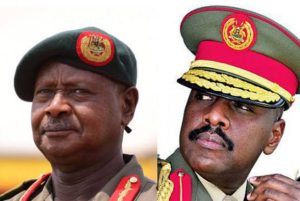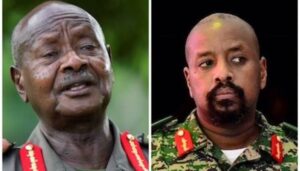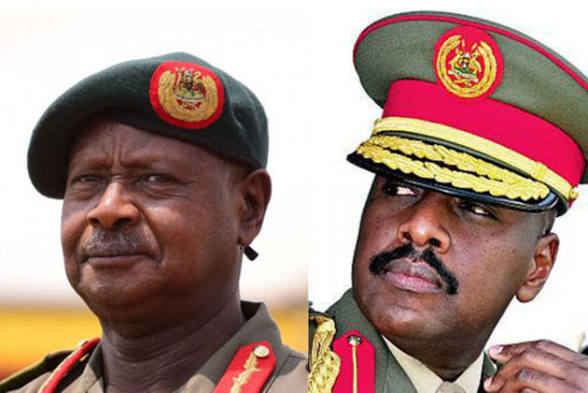
Jimmy Akena has made a strong and direct statement regarding political ambition and leadership in Uganda, addressing Muhoozi Kainerugaba in remarks that have sparked fresh national debate.
Speaking during a recent political engagement, Akena made it clear that he has no problem with Muhoozi aspiring to take over leadership from his father. However, he emphasized that such ambitions must not interfere with the rights of others.
“I have no objections for Muhoozi thinking he can replace his father,” Akena said, signaling a level of acceptance of political competition. His tone suggested that ambition in itself is not the issue.
Akena’s main concern, however, was about fairness and equal opportunity. He stressed that every Ugandan should have the chance to pursue their dreams without intimidation or obstruction.
“But in that dream, he shouldn’t stop me, son of Obote, from also achieving my dreams,” he added, making a powerful personal reference to his own political journey.
As the son of former Ugandan president Milton Obote, Akena’s statement carries historical weight. It reflects not only his personal ambitions but also his belief in political inclusiveness.
His remarks come at a time when discussions about leadership succession in Uganda are becoming more intense. Many people are questioning how future transitions of power will be handled.

Akena used the moment to call for a level playing field, where leadership is determined by merit, public support, and democratic processes rather than influence or force.
He warned against any actions that could limit political space or silence alternative voices. According to him, such actions undermine democracy.
The UPC leader also highlighted the importance of respecting citizens’ rights, including the freedom to express political views and contest for leadership positions.
His message was not just directed at Muhoozi, but also at the broader political system. He called for reforms that ensure fairness for all participants.
Akena believes that Uganda’s future depends on allowing diverse ideas and leaders to emerge without fear. He stressed that competition should be healthy, not restrictive.
He further noted that political ambition should be guided by respect for others. Leaders, he said, must recognize that they are part of a larger national community.
The statement has generated mixed reactions among Ugandans. Some see it as a bold stand for democracy, while others view it as part of ongoing political rivalry.

Supporters of Akena have praised him for speaking openly and defending the rights of all Ugandans to aspire for leadership roles.
Critics, however, argue that such statements may increase political tension if not handled carefully. They call for dialogue and unity instead.
Despite differing opinions, the message has contributed to an important national conversation about leadership, power, and equality.
Akena’s words serve as a reminder that Uganda belongs to all its citizens, regardless of political background or affiliation.
He concluded by emphasizing that dreams should not be limited by power or position. Instead, they should be encouraged in a free and fair environment.
As Uganda continues to navigate its political future, voices like Akena’s are shaping the direction of public debate.
In the end, his message is clear: ambition is not the problem, but fairness must always come first in any democratic society.