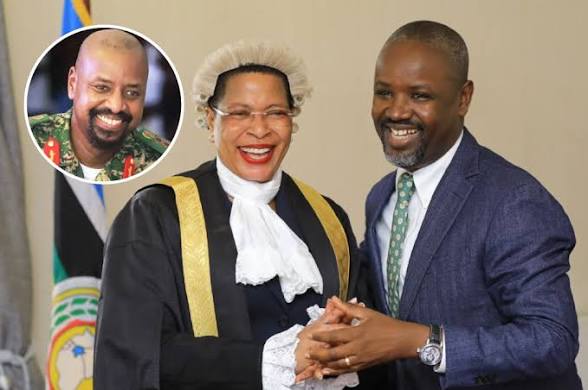
The Speaker of Parliament, Jacob Marksons Oboth-Oboth, has sparked national discussion after calling for prayers for Parliament, warning that the institution should not become a place where what he described as witchcraft is promoted.
His remarks were made during a thanksgiving ceremony for State Minister for Agriculture Desire Muhooza held in Kampala on 8th June 2026.
During his address, the Speaker urged religious leaders and Ugandans to consistently pray for the leadership of the country and its key institutions. He emphasized that Parliament, as the country’s highest legislative body, should be guided by moral strength, integrity, and divine direction.
Oboth-Oboth specifically stated that Parliament should not be associated with practices he referred to as witchcraft, but rather should remain a place of “praise, power, and good law-making.” His comments quickly gained public attention and sparked widespread debate.
The statement has since generated mixed reactions from different sections of the public. Some people interpreted it as a moral appeal aimed at encouraging ethical leadership and spiritual reflection among lawmakers.
Others, however, questioned the basis of such claims, arguing that references to witchcraft in formal political settings risk diverting attention from more practical governance issues such as accountability, service delivery, and legislative effectiveness.

Despite the controversy, discussions about spiritual beliefs and traditional practices have long existed within Uganda’s political and social environment. These conversations often intensify during politically sensitive periods such as elections or leadership transitions.
In many African societies, including Uganda, there are occasional public perceptions linking political success or influence to spiritual practices, although such claims are rarely substantiated with evidence. Analysts often describe these beliefs as part of broader cultural narratives.
Religious leaders across the country have frequently urged political actors to avoid such practices and instead focus on integrity, transparency, and service delivery. They often emphasize prayer, discipline, and ethical leadership as guiding principles for governance.
Oboth-Oboth was elected Speaker of the 12th Parliament on 25th May 2026 at the inaugural sitting held at Kololo Ceremonial Grounds in Kampala. He secured a decisive victory with 441 votes, defeating his opponents in a closely watched parliamentary contest.
His election followed a period of political uncertainty and speculation regarding the leadership transition in Parliament. The contest attracted significant attention from both ruling party members and opposition figures.
The race for the speakership came after former Speaker Anita Annet Among had been widely expected to seek another term but later withdrew from the process. Her withdrawal reshaped the political dynamics within Parliament.
Following internal consultations within the ruling National Resistance Movement, support reportedly consolidated behind Oboth-Oboth, leading to his overwhelming win in the parliamentary vote.
Since assuming office, the Speaker has repeatedly emphasized themes of accountability, institutional reform, and moral leadership. His recent remarks on witchcraft are seen by some observers as part of a broader message on ethics in governance.

At the thanksgiving event, Oboth-Oboth joined other leaders in encouraging prayers for national institutions. Such events in Uganda often combine political speeches with religious appeals, reflecting the close relationship between faith and public life.
Political analysts note that the intersection of religion and politics in Uganda is not unusual, as leaders frequently reference spiritual themes when addressing national issues or public concerns.
However, critics argue that bringing supernatural explanations into institutional challenges may overshadow deeper structural issues such as corruption, budget management, and administrative inefficiencies.
Supporters of the Speaker’s message say his comments reflect concern for moral direction within Parliament and a desire to strengthen unity and ethical conduct among legislators.
The debate triggered by his remarks continues to circulate in public discourse, with citizens expressing differing interpretations of his intentions and the broader meaning of his statement.
As discussions continue, attention remains on how Parliament under Oboth-Oboth’s leadership will balance issues of governance, accountability, and public perception in the months ahead.