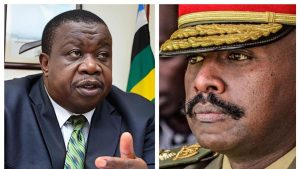
The Chief of Defence Forces (CDF) of the Uganda People’s Defence Forces (UPDF), General Muhoozi Kainerugaba, has attracted public attention following reports outlining his estimated monthly salary and benefits attached to his senior military position.
As the head of Uganda’s armed forces, the CDF role is regarded as one of the most powerful and sensitive offices in the country’s security structure.
Although official government salary records are not always publicly disclosed in detail, reports estimate that General Muhoozi earns about UGX 15 million per month, which is roughly equivalent to 4,000 US dollars. This figure is widely circulated in media discussions about the remuneration of top government officials.
The reported salary reflects the seniority and responsibilities that come with leading the entire UPDF. As CDF, General Muhoozi is responsible for overseeing military operations, strategic planning, and the overall readiness of Uganda’s defence forces.
His position also places him at the centre of national security decision-making, working closely with the President and other security agencies. This makes the role both highly influential and demanding in terms of leadership and accountability.
In addition to the monthly salary, the CDF position comes with several official benefits designed to support the office holder in performing duties effectively. These benefits are standard for senior military leadership roles.

One of the key benefits includes official accommodation provided by the state. This ensures that the CDF has secure and suitable housing that meets the requirements of a high-level security official.
Another major benefit is transportation. The CDF is provided with official vehicles and logistical support to facilitate movement during both official duties and emergency operations across the country.
Security is also a major component of the benefits package. General Muhoozi, like other senior military leaders, is assigned a dedicated security detail to ensure personal protection at all times.
Healthcare coverage is another important entitlement. The CDF is provided access to specialized medical services, often through military hospitals or designated government health facilities, ensuring priority treatment when needed.
These healthcare arrangements are intended to guarantee that top military officials remain in good health, given the demanding nature of their responsibilities and the sensitivity of their work.
The CDF role also comes with operational allowances, which are meant to support the execution of military duties. These allowances vary depending on assignments, missions, and operational requirements.
Such allowances are common in military structures and are intended to ensure that officers can effectively manage field operations without personal financial constraints.
Beyond financial and logistical benefits, the position carries significant institutional authority within the UPDF. The CDF plays a central role in shaping military policy and coordinating defence strategies.

General Muhoozi’s appointment as CDF has therefore placed him in a position where he is directly involved in national security planning and military oversight at the highest level.
His role also involves managing senior officers and ensuring discipline and efficiency within the armed forces. This requires strong leadership and administrative capabilities.
Public interest in the salaries and benefits of high-ranking officials often reflects broader curiosity about government expenditure and transparency in public service remuneration.
While the reported figures provide an estimate, official salary structures for senior military officers are typically guided by government pay scales and internal defence regulations.
As discussions continue in the media and among citizens, the focus remains on understanding how public resources are allocated to top security officials and how such roles contribute to national stability.
Ultimately, the CDF position remains one of the most critical in Uganda’s governance and security framework, combining leadership responsibility with significant state-provided benefits designed to support national defence operations.