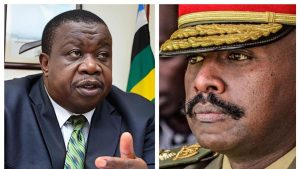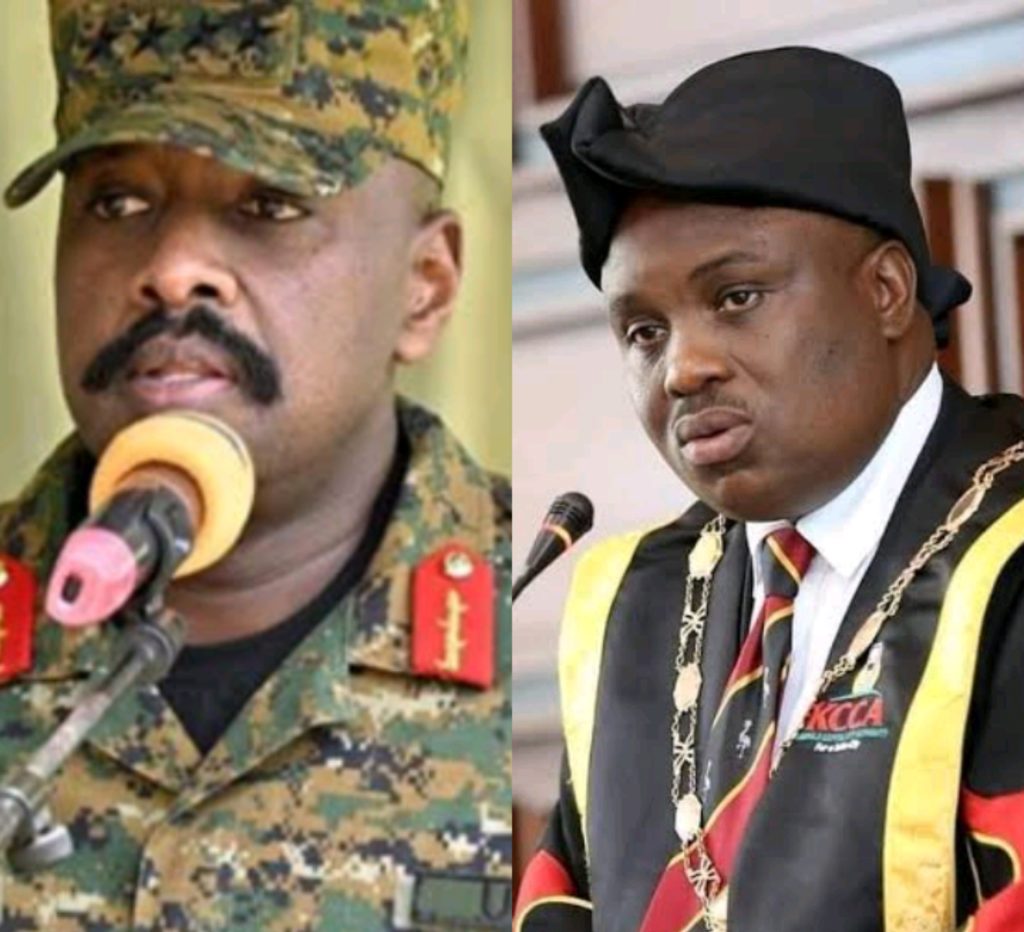
Gen Muhoozi Kainerugaba has once again ignited political debate after launching a scathing attack against Kampala Lord Mayor , accusing him of frustrating the progress of Uganda’s capital city for more than two decades. The remarks, delivered in his characteristic blunt style, immediately drew widespread attention across political circles and social media platforms.
In a strongly worded statement, Muhoozi expressed frustration over what he described as years of political battles involving leaders whom he believes have stood in the way of development and effective governance. He singled out Lukwago, questioning his leadership record and criticizing his long tenure in Kampala politics.
“We have been fighting many battles in this country my friends. Imagine fighting with an idiot like Lukwago for 25 years? That he is a ‘Mayor’ of Kampala? And he frustrates millions of citizens for decades. Those games are definitely over,” Muhoozi declared, in remarks that quickly sparked reactions from supporters and critics alike.
The comments mark the latest chapter in a long-running political rivalry between figures aligned with the ruling establishment and opposition leaders who have maintained a strong presence in Kampala. For years, the capital has remained a major political battleground, often producing leaders who challenge the government on policy and governance issues.

Muhoozi’s remarks appear to reflect growing frustration within sections of the ruling establishment over the pace of transformation in Kampala. Government officials have repeatedly argued that political disagreements and administrative conflicts have slowed efforts to modernize the city and improve service delivery.
Supporters of the General echoed his sentiments, arguing that Kampala deserves leadership that prioritizes development, infrastructure, and public services above political confrontation. Many contend that endless disputes between city leaders and central government institutions have hindered progress that residents desperately need.
Critics, however, viewed Muhoozi’s comments as unnecessarily confrontational and disrespectful toward an elected leader. They argue that political differences should be addressed through democratic debate rather than personal attacks, regardless of the intensity of the disagreements involved.
Lukwago has for years remained one of the most recognizable opposition figures in Uganda. His political career has been defined by frequent clashes with government authorities, particularly over the management of Kampala and the balance of power between elected city leaders and central government agencies.
Political analysts note that Kampala occupies a unique position in Uganda’s political landscape. As the country’s capital and largest urban center, the city often serves as a focal point for opposition politics, making its leadership highly influential in national political conversations.
Observers believe Muhoozi’s latest statement could signal a more aggressive political posture ahead of future electoral contests. His comments come at a time when political actors across the country are increasingly positioning themselves for the next phase of Uganda’s political journey.

The General has in recent years become known for making headlines through outspoken remarks on governance, security, diplomacy, and political affairs. His statements frequently dominate public discourse and often generate intense debate about the direction of national politics.
For many supporters, Muhoozi represents a new generation of leadership that is willing to speak openly about issues that others may avoid. They argue that his direct communication style resonates with citizens who are frustrated by bureaucracy and slow decision-making.
Others remain skeptical, suggesting that sharp rhetoric alone cannot solve the complex challenges facing Kampala. They insist that meaningful progress requires cooperation among political actors, government agencies, and city administrators rather than escalating public confrontations.
The latest attack on Lukwago also reignited discussion about Kampala’s governance structure. Over the years, disagreements between elected leaders and government institutions have repeatedly dominated headlines, often overshadowing conversations about service delivery and urban planning.
Residents of Kampala continue to face challenges ranging from traffic congestion and drainage problems to rapid urbanization and infrastructure demands. Many citizens say they are less interested in political disputes and more concerned about practical solutions that improve their daily lives.
Analysts argue that the city’s future development will depend largely on the ability of leaders from different political backgrounds to work together despite their differences. Without cooperation, they warn, longstanding challenges could persist regardless of who occupies leadership positions.

Meanwhile, Muhoozi’s declaration that “those games are over” has fueled speculation about what exactly he meant by the statement. Some interpret it as a signal of impending political changes, while others see it as an expression of determination to challenge opposition influence in the capital.
Neither Lukwago nor his close allies immediately responded to the remarks, but political observers expect the comments to generate further exchanges in the coming days. Given the history between government supporters and opposition figures in Kampala, the controversy is unlikely to fade quickly.
The episode underscores the increasingly heated nature of political discourse as the country moves toward a new political cycle. Strong statements from influential figures continue to shape national conversations and capture public attention across different sections of society.
Whether viewed as a justified criticism of city leadership or an unnecessary political attack, Muhoozi’s latest comments have once again placed him at the center of Uganda’s political spotlight, ensuring that debates over Kampala’s leadership, governance, and future direction remain firmly in the public eye.