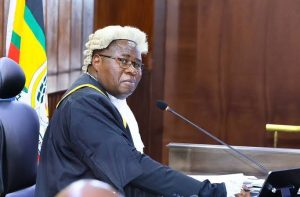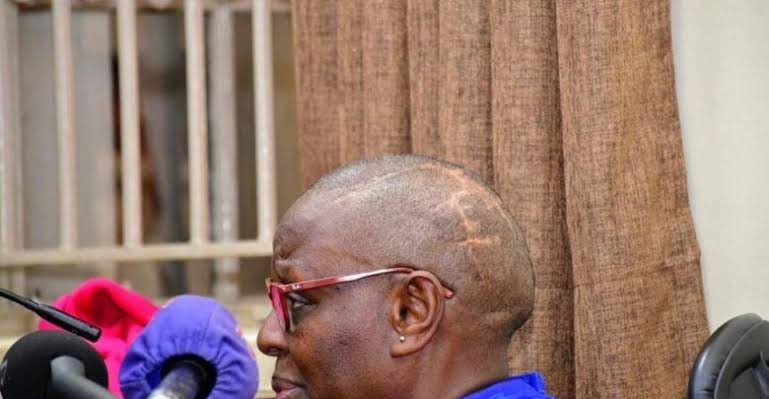
Emotional scenes filled the High Court in Kampala as Molly Katanga opened her defence in the ongoing case surrounding the death of her husband, Henry Katanga. Speaking before Justice Comfort Kania, Molly firmly denied all accusations against her, maintaining that she had no role in her husband’s death and describing the ordeal as deeply painful and misunderstood.
Seated quietly in the dock with a pink veil covering her head, Molly appeared emotional but composed as she addressed the court. Her visible injuries and calm tone drew attention from those present, as she began recounting the events leading up to the tragic incident in November 2023.
“I did not kill my husband,” she told the court with emphasis, insisting that she does not know how to use a gun and has no experience handling firearms. Her defence strongly centers on this claim, arguing that she could not have carried out the act she is accused of.
Molly went on to describe her 35-year marriage as peaceful and stable, portraying her late husband as a quiet and gentle man. According to her, their relationship had been built on understanding, and there had never been any serious conflicts that could lead to such a tragic outcome.
However, she revealed that things had changed in the months before his death. Henry Katanga had reportedly been under immense pressure due to financial struggles linked to his money-lending business, which had begun to take a toll on his mental well-being.
One of the major sources of stress, she told the court, was unpaid debt from clients. Among them was the late businessman Apollo Nyegamehe, commonly known as Aponye, who allegedly owed Katanga about Shs1.5 billion at the time of his death in a road accident in 2023.
Recalling the day Aponye died, Molly shared a deeply emotional moment. She said her husband expressed despair, telling her that it felt like he had lost everything he had worked for, highlighting how heavily the unpaid debt weighed on him.

According to her testimony, Henry often complained about clients failing to repay their loans, describing the situation as overwhelming. She said the financial pressure appeared to push him into a state of depression, something she had not seen before in their long marriage.
On the night before his death, Molly said her husband returned home visibly distressed. He reportedly spoke about giving up the business entirely, saying it had become too stressful and was affecting his mental state.
After this conversation, Molly said she went to the prayer room, leaving him alone in the dining area. She later returned, wished him goodnight, and went to bed, believing he would eventually calm down.
She told the court that when he later joined her in bed, he appeared restless and unable to sleep. This unusual behavior further convinced her that something was seriously troubling him.
The following morning, Molly narrated a terrifying and violent incident that left her severely injured. She said that while she was in the bathroom, her husband suddenly attacked her without warning.
“He kept hitting me as I asked what was happening,” she told the court, explaining how she tried to shield herself from the blows. She described being dragged and repeatedly struck on the head with a baton.

The injuries she sustained were severe, including broken hands and deep cuts to her head. In court, she displayed the scars, explaining that she still suffers from dizziness, headaches, and loss of balance as a result of the attack.
Molly then described a chilling moment during the incident. She said that after the violent outburst, her husband suddenly paused and made a statement that has become central to her defence.
According to her, he said he was going to end his life. Moments later, she heard a loud sound, followed by complete silence, a sequence of events that she believes points to a tragic act of suicide.
Her defence team argues that Henry Katanga may have experienced a mental breakdown triggered by overwhelming stress and financial pressure. They suggest that his actions that morning were not premeditated but rather the result of emotional distress.
Molly also revealed that in the weeks leading up to his death, her husband had complained of persistent headaches. Despite this, he reportedly refused medical attention, insisting that his condition was simply stress-related.
As the trial progresses, the court is now faced with the task of carefully examining the evidence and testimony. The key question remains whether the circumstances described support Molly’s account or the prosecution’s claim of murder.
The case continues to draw public attention, with many following closely as new details emerge. For now, the courtroom remains the center of a deeply complex and emotional search for the truth behind Henry Katanga’s death.