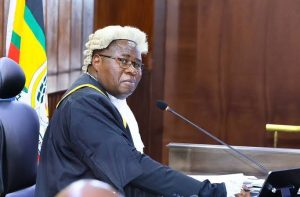
TikToker Ibrahim Musana, popularly known as Pressure 247, has once again drawn public attention after boldly declaring in court that he is the King of Buganda. His statement, made with confidence, has left many shocked, confused, and curious about what could have led to such a claim.
During the court proceedings, Pressure 247 reportedly stood firm on his words, insisting that he truly holds the position of Buganda’s monarch. Despite the seriousness of the setting, he did not back down or attempt to soften his statement, which only added to the tension and drama in the courtroom.
His remarks quickly spread across social media, where users began debating whether his claim was meant to be taken seriously or if it was simply part of his online persona. Known for his bold and attention-grabbing content, Pressure 247 has built a following by making controversial and unusual statements.
However, this particular claim goes far beyond entertainment, as it touches on a deeply respected cultural institution. The Kingdom of Buganda is one of the most prominent traditional kingdoms in Uganda, with a well-established leadership structure and a recognized king.
The current Kabaka of Buganda is Ronald Muwenda Mutebi II, who has held the position for many years and is widely respected both within and beyond the kingdom. This makes Pressure 247’s claim even more surprising and sensitive.
Cultural leaders and members of the Buganda community have expressed concern over such statements, noting that the institution of the Kabaka is not something to be joked about or claimed lightly. To them, it represents history, identity, and unity.
Legal experts have also pointed out that making such claims in a court of law raises serious questions. Courts are places where facts and evidence matter, and any unusual claims are expected to be supported by credible proof.

Despite this, Pressure 247 reportedly maintained his position, showing no signs of withdrawing or correcting his statement. His confidence has left many wondering about his intentions and state of mind.
Some observers believe that his actions may be part of a strategy to gain more attention and remain relevant in the highly competitive world of social media. In an age where viral moments can bring fame, extreme statements often attract large audiences.
Others, however, see the situation differently, expressing concern that such claims could indicate deeper issues that should not be dismissed as mere entertainment. They argue that the matter should be handled with seriousness and care.
The incident has also sparked conversations about the influence of social media personalities and the boundaries between online content and real-life responsibilities. As influencers gain more power, their words can have significant impact.
Among young people, reactions have been mixed. Some find the situation amusing and continue to share clips and comments online, while others feel it crosses a line and disrespects cultural institutions.
Authorities have not yet provided detailed information about the outcome of the court proceedings, leaving the public waiting for further updates. This has only increased curiosity and speculation.

The case highlights the challenges that come with balancing freedom of expression and respect for tradition. While individuals are free to express themselves, there are expectations when it comes to sensitive cultural matters.
For the Buganda Kingdom, maintaining the dignity of the Kabaka remains a priority. Any statements that appear to undermine this position are likely to be taken seriously by both leaders and the community.
Pressure 247’s growing fame means that his actions are closely watched, making incidents like this even more impactful. What might have once been ignored can now quickly become national news.
As discussions continue, some people are calling for clearer guidelines on how social media personalities should conduct themselves, especially when dealing with cultural and national issues.
At the same time, others defend his right to speak freely, even if his statements are controversial or unusual. This reflects the broader debate about freedom of speech in modern society.
In the end, Pressure 247’s courtroom declaration has once again shown how a single statement can capture national attention and spark widespread debate. Whether seen as a publicity stunt or something more serious, it has left many questions unanswered.
For now, the public continues to watch closely, waiting to see what will happen next and whether Pressure 247 will maintain his claim or take a different approach moving forward.