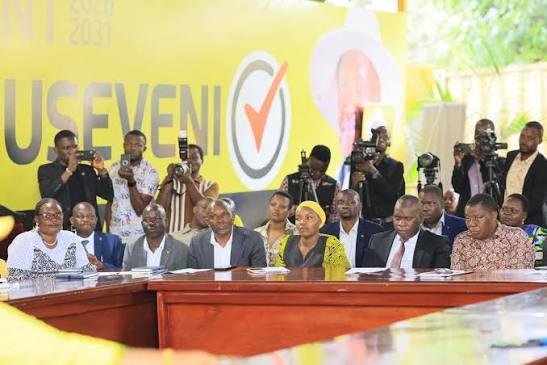
A major political development has unfolded in Uganda as over 30 independent Members of Parliament-elect have signed cooperation agreements with the ruling National Resistance Movement (NRM).
The move is expected to significantly strengthen the party’s dominance in Parliament following the January 15, 2026 general elections.
The signing ceremony took place at the NRM headquarters in Kampala, where the MPs-elect expressed their willingness to work closely with the ruling party.
The agreements were formalized through expressions of interest, which will later be structured into memoranda of understanding.
This development comes shortly after the elections in which NRM secured a clear majority in Parliament. By bringing independent legislators into its fold, the party is further consolidating its legislative power.
The group of independent MPs is being guided by a prominent figure who has branded herself the “Dean of Independents.” She played a key role in organizing the group and encouraging them to cooperate with the NRM.
She assured the MPs-elect that they would enjoy the same benefits as official party members, even without formally crossing to join the party. This arrangement allows them to maintain their independent status while still aligning with the ruling party’s agenda.

The agreements are seen as a strategic move by both sides. For the independents, it offers access to resources, influence, and support within Parliament. For the NRM, it ensures a stronger and more stable majority.
Political analysts believe this could reshape the dynamics of Parliament, reducing the influence of opposition voices and making it easier for the ruling party to pass legislation.
The timing of the agreements is also significant, coming just months before the swearing-in of the new Parliament. This suggests a deliberate effort to organize alliances early.
As part of the cooperation, the independent MPs are expected to attend the upcoming NRM retreat in Kyankwanzi, scheduled to begin on April 7.
The Kyankwanzi retreat is traditionally an important event for the ruling party, where key policies, strategies, and legislative priorities are discussed.
By participating in the retreat, the independent MPs will have an opportunity to align themselves with the party’s vision and agenda ahead of parliamentary sessions.
This move is likely to further deepen their cooperation with the NRM and strengthen internal cohesion within the group.
However, the development has also sparked debate among political observers and the public. Some question whether the independents can truly maintain their independence under such arrangements.
Critics argue that this could undermine the spirit of multiparty democracy, as independent MPs may effectively function as ruling party affiliates.
Supporters, on the other hand, view the move as a practical approach to governance, emphasizing the need for collaboration in order to achieve national development goals.

The agreements may also influence committee assignments, voting patterns, and the overall functioning of Parliament once it is fully constituted.
Meanwhile, opposition parties are closely monitoring the situation, as it could affect their ability to challenge government policies effectively.
The NRM’s growing numbers in Parliament are expected to give it a significant advantage in shaping national legislation and policy direction.
As Uganda prepares for the next parliamentary term, this development marks a crucial moment in the country’s political landscape.
It remains to be seen how this cooperation will play out in practice, but it is clear that the balance of power in Parliament has shifted even further in favor of the ruling party.
With alliances forming and strategies taking shape, the stage is now set for what could be a highly controlled and decisive parliamentary period in Uganda.