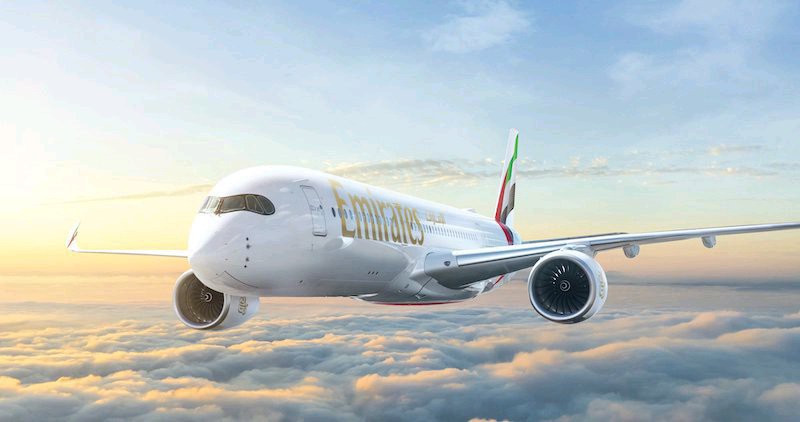
Emirates Airlines is celebrating a significant milestone in Uganda, marking 25 years since its inaugural flight to Entebbe in 2000. The airline’s enduring presence in the country underscores its commitment to fostering international connectivity and supporting Uganda’s growing tourism and aviation sectors.
The Minister of Works and Transport, Gen. Katumba Wamala, praised Emirates for its long-standing partnership with Uganda, noting the airline’s role in enhancing aviation safety, promoting tourism, and reinforcing confidence in the nation’s security standards. “Emirates’ sustained operations in Uganda are a testament to the reliability of our aviation infrastructure and the safety of our skies,” Wamala said.
Since its first flight, Emirates has transported over 2.8 million passengers across 15,900 flights through its Dubai hub, linking Uganda with a global network of destinations. The minister also highlighted the airline’s deployment of newly refurbished Boeing 777 aircraft on the Dubai–Entebbe route as a signal of growing trust in Uganda’s aviation facilities.
“Passenger comfort is a priority for Emirates across all classes, including economy, reflecting their dedication to providing a premium travel experience,” Wamala added.
In recent years, Emirates has partnered closely with the Uganda Tourism Board (UTB) to showcase the country’s natural beauty, wildlife, adventure tourism, and rich cultural heritage to the airline’s international clientele. Since January 2025, traffic on the Dubai–Entebbe route has increased by 16 percent, with travelers primarily arriving from the US, China, India, the UK, Thailand, and the Middle East.
Rashid Al Ardha, Emirates’ Vice President of Commercial Operations for sub-Saharan Africa, reflected on the airline’s evolution: “Over the past 25 years, we have shifted from routing passengers through Nairobi and Addis Ababa to offering daily direct flights to Entebbe. Carrying more than 2.8 million passengers, we see significant opportunities for growth in both passenger and cargo services.”
Emirates has become a vital partner for Uganda, connecting the country to global markets, tourism opportunities, and business networks. The airline recently renewed its memorandum of understanding with UTB to continue promoting Uganda as a premier travel destination. This collaboration has included familiarization trips for tour operators from the UAE, West Asia, and the Indian Ocean region.
“Even in markets with established national carriers, we prioritize travelers’ preferences, with Dubai serving as a key hub for international connections,” Al Ardha said.
Operating over 140 destinations across 80 countries, Emirates maintains a fleet of 265 aircraft, with 309 more on order, making it the world’s largest international airline. The company is recruiting 17,000 new employees globally, including cabin crew, engineers, and ground staff, with more than 25 Ugandans currently serving as cabin crew and additional local hires across various roles.
Sustainability is also a key focus for Emirates, which has conducted several flights powered by Sustainable Aviation Fuel (SAF) in partnership with providers such as Neste. The airline has committed $200 million to renewable energy projects aimed at reducing its carbon footprint.
Mohamed Taher, Emirates’ Country Manager for Uganda, emphasized the importance of the market: “Over 25 years, we have built strong ties with customers and stakeholders, investing in operations to ensure world-class service. We take pride in connecting international travelers to Uganda and enabling Ugandans to explore the world comfortably.”
Fred Bamwesigye, Director General of the Uganda Civil Aviation Authority (UCAA), also lauded Emirates’ contribution, highlighting Entebbe International Airport’s growth. Passenger traffic has risen from 118,527 in 1991 to over 2.3 million in 2024, while cargo volumes increased from 64,700 metric tonnes to more than 67,000 metric tonnes. Recent infrastructure upgrades include the renovation of Runway 17/35, ongoing improvements to Runway 12/30, new aprons and taxiways, and a completed cargo center.