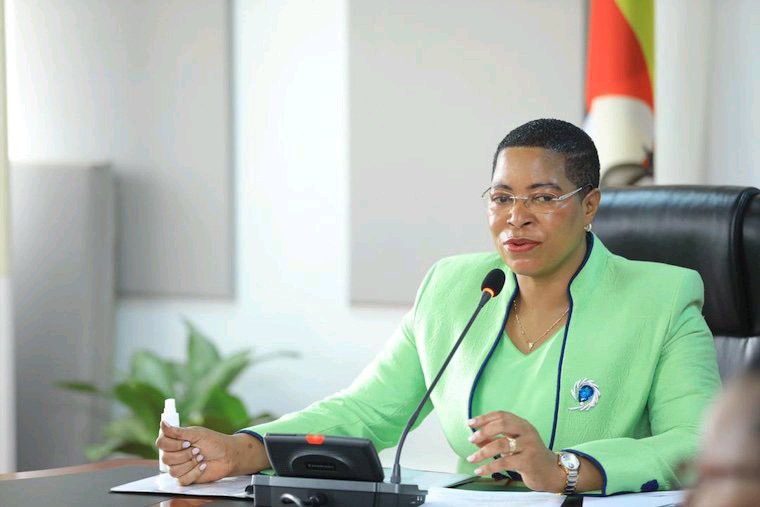
In her home district of Bukedea in eastern Uganda, Speaker Anita Annet Among is treated like royalty. As she steps out of her black convoy, crowds enthusiastically greet her, chanting “Mama Speaker.” To her supporters, she is a problem-solver, a builder of hospitals, a mediator of strikes, and a distributor of scholarships—exercising the same authority she commands in Parliament.
Among’s rise to power in Uganda’s political arena, long dominated by President Yoweri Museveni, has been nothing short of remarkable. From a humble backbencher to one of the country’s most influential figures, her influence extends well beyond the parliamentary chambers. While her rapid ascent has garnered both praise and criticism, her political sway is undeniable.
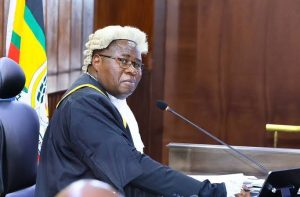
Few expected Among’s meteoric rise when she first entered Parliament. But following the sudden death of Speaker Jacob Oulanyah in 2022, she quickly stepped into the role, inheriting a fractured House and a weary public. Since then, she has transformed the Speakership into a politically active and powerful position.
Across Uganda, Among has positioned herself as both a patron and problem-solver. She has mediated industrial disputes, driven development projects, and even convinced opposition MPs like Abdu Katuntu and Martin Ojara Mapenduzi to switch allegiance to the ruling NRM party.
“This is a people-centered Parliament that handles every grievance from across the country,” she said after resolving a nationwide teachers’ strike.
Political analysts suggest Among has redefined the office of Speaker, using it as a platform for national political influence. Unlike her predecessors, who focused primarily on parliamentary procedure, Among has taken on a more active role, engaging in conflict resolution, service delivery, and political mobilization. Under her leadership, the parliamentary budget has reportedly tripled. Her position as NRM second national vice chairperson (women) further solidifies her power within the ruling party.
Among’s political approach also includes high-profile philanthropic acts. She recently pledged $4.3 million to fund a cancer patients’ home at Mulago Hospital through her foundation. She has also built a teaching hospital and a school in Bukedea. Lavish gifts, including a Range Rover Vogue for her husband Moses Magogo, further enhance her image as a wealthy benefactor. Even President Museveni has praised her development efforts, though questions about their funding sources persist.
However, her rise has not been without controversy. In 2024, the UK and US imposed sanctions on her, accusing her of corruption related to iron sheets intended for Karamoja communities—allegations she denies, claiming they are politically motivated. Domestically, her decisions, such as suspending MP Francis Zaake, have faced legal challenges, and critics accuse her of shielding corruption within Parliament. Her remarks on corruption have sparked further condemnation.
Despite this, President Museveni has defended her, framing the criticism as attacks from foreign interests. While Among’s power is significant, it remains uncertain how sustainable it is in Uganda’s political system, where ambitious leaders often face limits. Past political figures like Gilbert Bukenya, Amama Mbabazi, and Rebecca Kadaga once wielded great influence but saw their power diminish.
Supporters view Among as a potential future leader, while critics see her as a populist consolidating power through patronage. Regardless, Among has redefined political influence in Uganda, with the Speaker’s gavel now carrying almost as much weight as the voice from State House.
Anita Among has mastered the art of standing out without appearing overtly defiant. But the same forces that propelled her rise may one day challenge her. Whether she will remain a lasting political powerhouse or be constrained by her loyalty to the state remains to be seen. What is certain is that she has changed the political landscape in Kampala, making the Speaker’s position one of immense national significance.